Whitwick Historical Group have a large archive of several thousands of photographs of people, places and events in and around the Whitwick area from the early days of photography to the present day. Sadly, some of these photographs have suffered from the passage of time and the quality of the older ones show signs of the limited technology available at that time, where some were over or under exposed when they were taken. Photographs from our archive are used to form the monthly pictures in our annual calendar every year. Due to those that are damaged or of poor quality, many would not be able to be displayed in the calendar. These photographs are still important in being able to provide us with a visual history of the Whitwick area and people. Therefore, with the use of improved technology, it is now possible to remove the errors of the original photograph so that a clearer, cleaner image can now be shown, without losing the original image. Here are displayed the original and updated photograph for you to see, along with the information that we have regarding the photograph. Unfortunately, some photographs do not have any information associated with them and we would be extremely grateful if anyone seeing these photographs could shed some light on them. If you also have further information on any of the photographs we would be delighted to receive them. We hope that you enjoy this collection. All of them can be viewed at the Old Station during our normal opening hours.
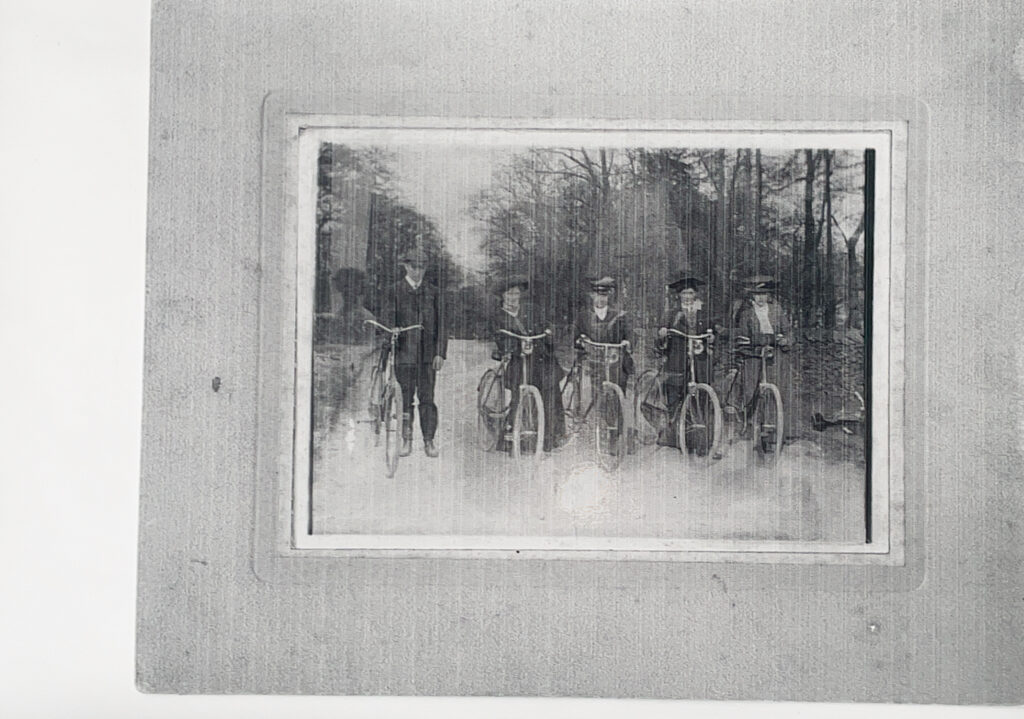
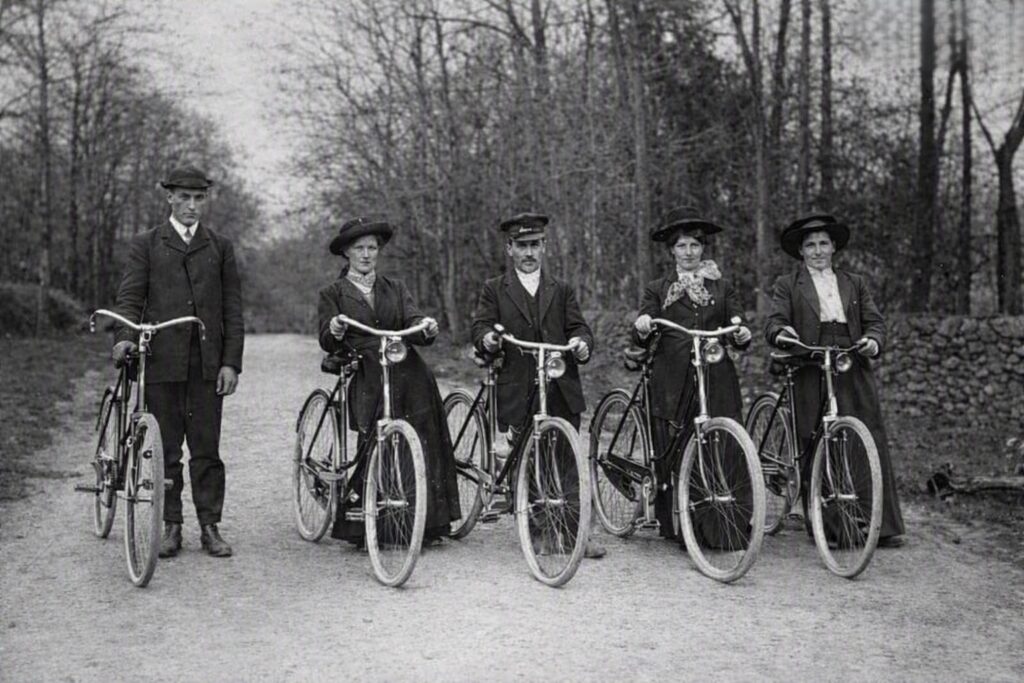
A photograph in our collection donated by Chris Matchett. It shows a group of five cyclists on Sharpley Road, Whitwick. There is no other information.

This image is from an article in the Coalville Times on Friday 18th August, 1939 and shows members of the Beaumanor Lodge (Whitwick) of the R.A.O.B. (Royal Antediluvian Order of Buffaloes) on their second annual parade.
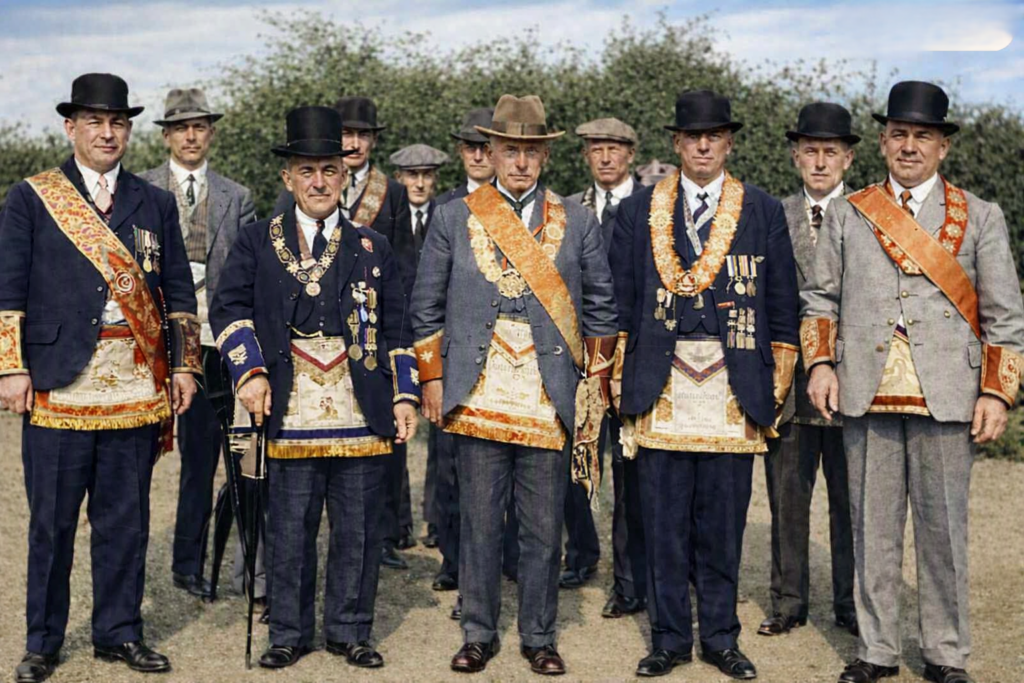
The article says “A procession led by the Thornton Band and in which the Oaks Carnival Band also took part, was headed by the banner of the Fitzwilliam Hall Sick and Dividend Society of Nailstone Wood, and there were representatives of various local lodges, the Bagworth and Whitwick branches of the British Legion, with their standards, Coalville Ambulance Brigade, V.A.D. Nurses and Scouts and Guides.
Officers in the parade included Bro. E. Watts, Provincial Grand Primo of the Coalville and District Province, Bro. J. Toon, P.P.G.P. Bro. G. H. Hazelgrave, Primo of the Beaumanor Lodge, Bro. S. Collier, the Lodge Secretary, Councillor S. E. Perry, chairman of the Coalville Urban District Council, Councillor Ernest Aris, and Mr H. T. Plowman, house governor and secretary of the Leicester Royal Infirmary.
Starting from Hermitage Bridge, the procession proceeded to Whitwick via Hermitage Road and Silver Street, then to the top of Leicester Road and back through the Market Place and North Street to the Parish Church, where the service was conducted by the vicar, the Rev. F. G. Hogarth.
The procession was resumed after the service and a collection taken en route and at the church was for the funds of the Leicester Royal Infirmary and the Whitwick Nursing Association.”
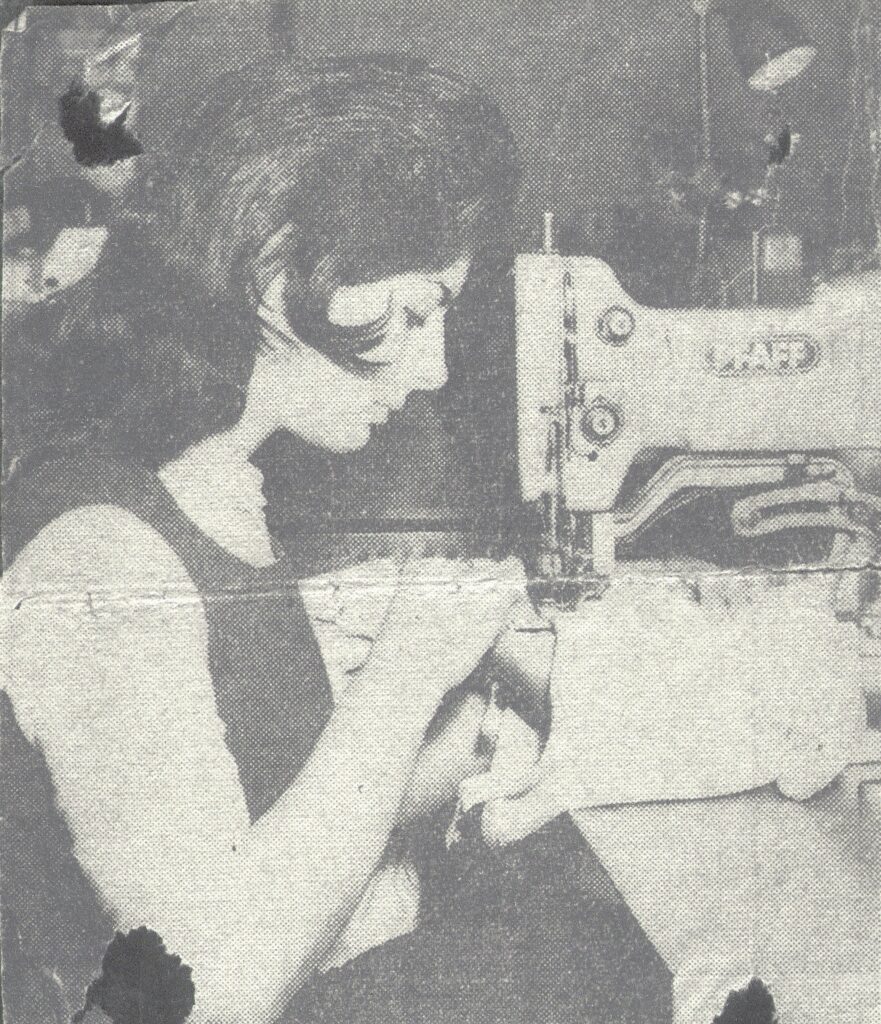
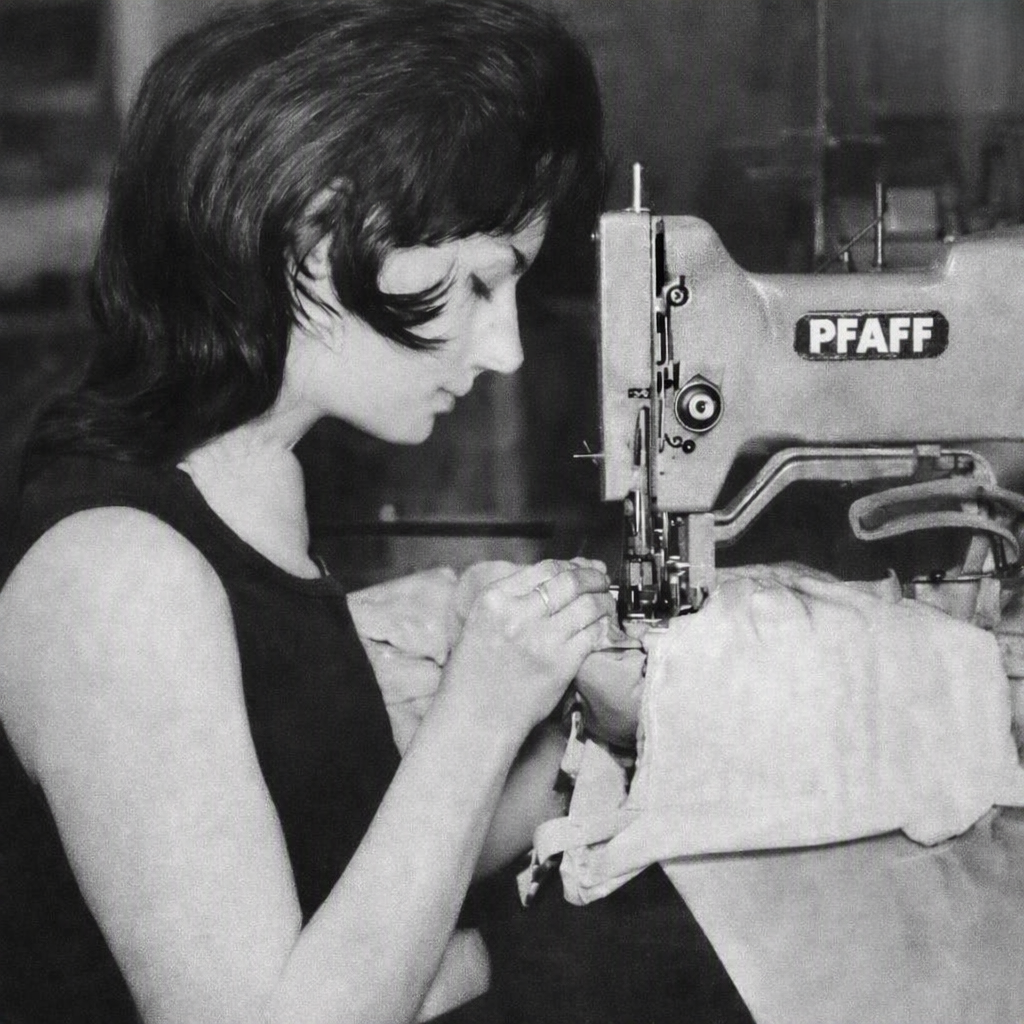
Jackie Middleton at work in the Flexor Ltd factory in North Street in 1961. This is from a newspaper cutting with the words “Raven haired Jackie Middleton (18), of 24 Beaumont Road, Whitwick, pictured at work in the Flexor Ltd. Factory attaching a suspender to a lady’s roll-on. She is operating an automatic stitching machine.”
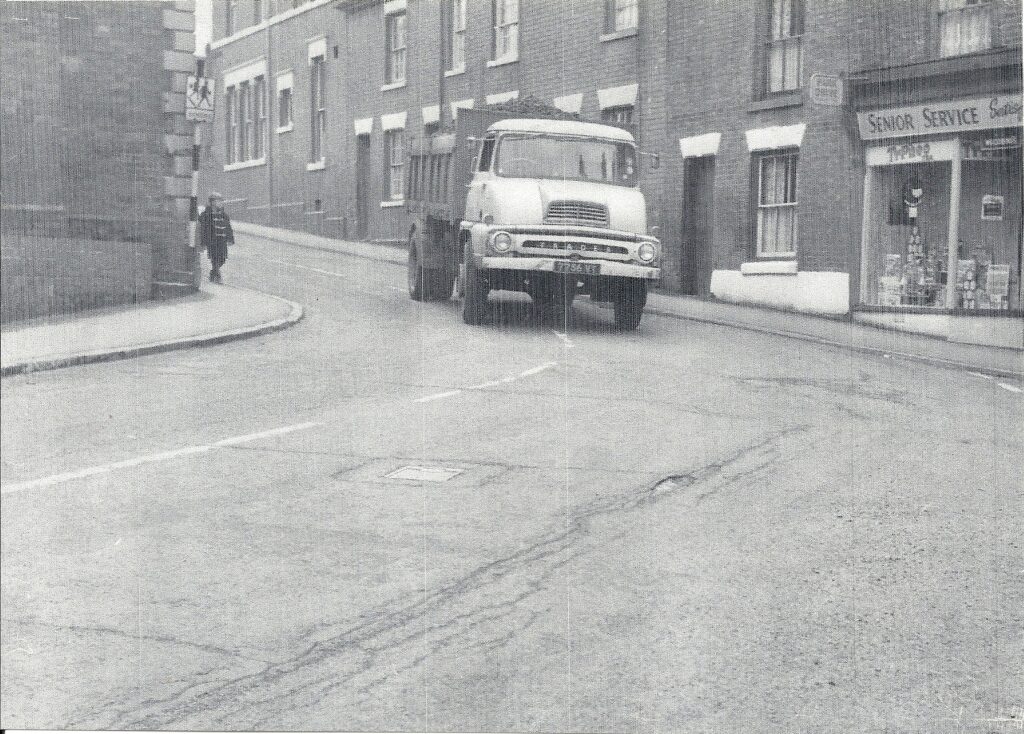
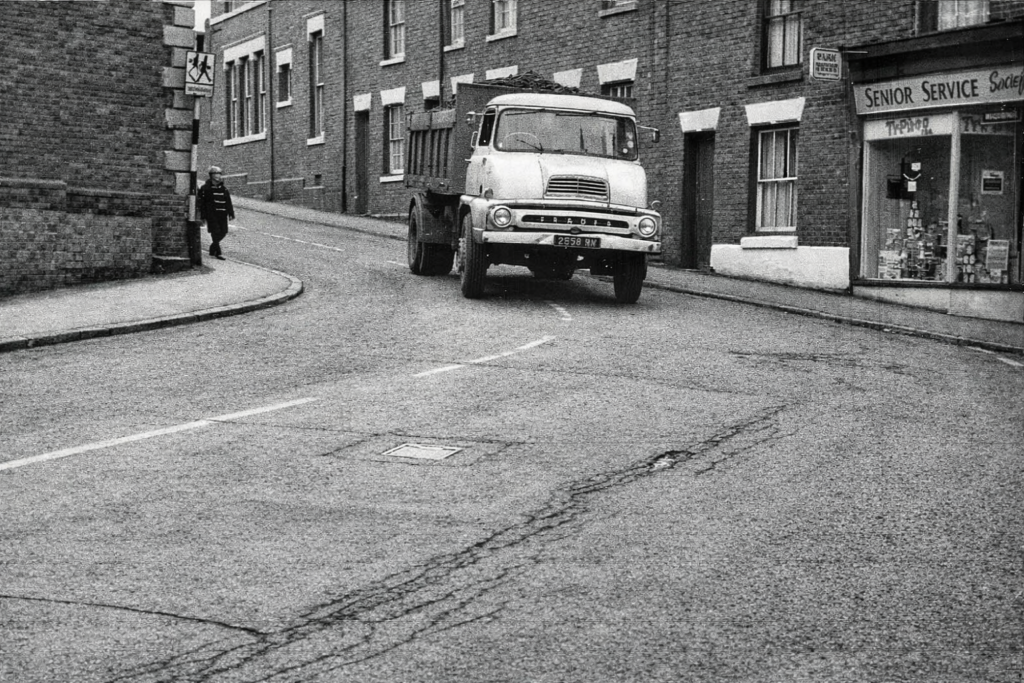
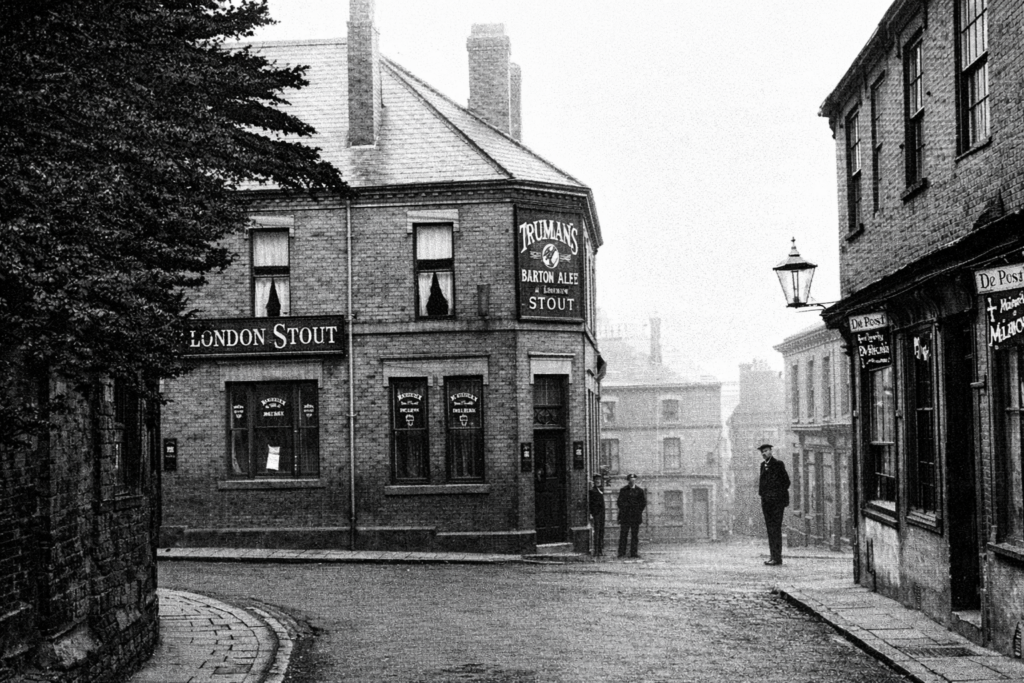
The dangerous bend at the road junction on Vicarage Street with Castle Street and Leicester Road. Date unknown. The danger of this bend was removed when the new road layout joined the Market Place directly to Leicester Road and Vicarage Street was blocked off to through traffic in 1972.
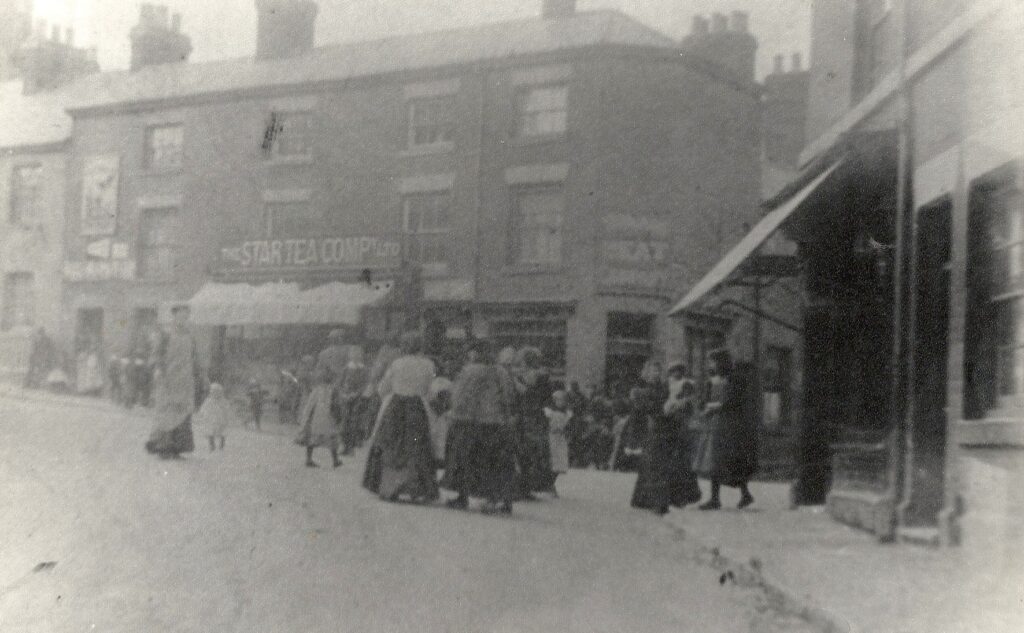
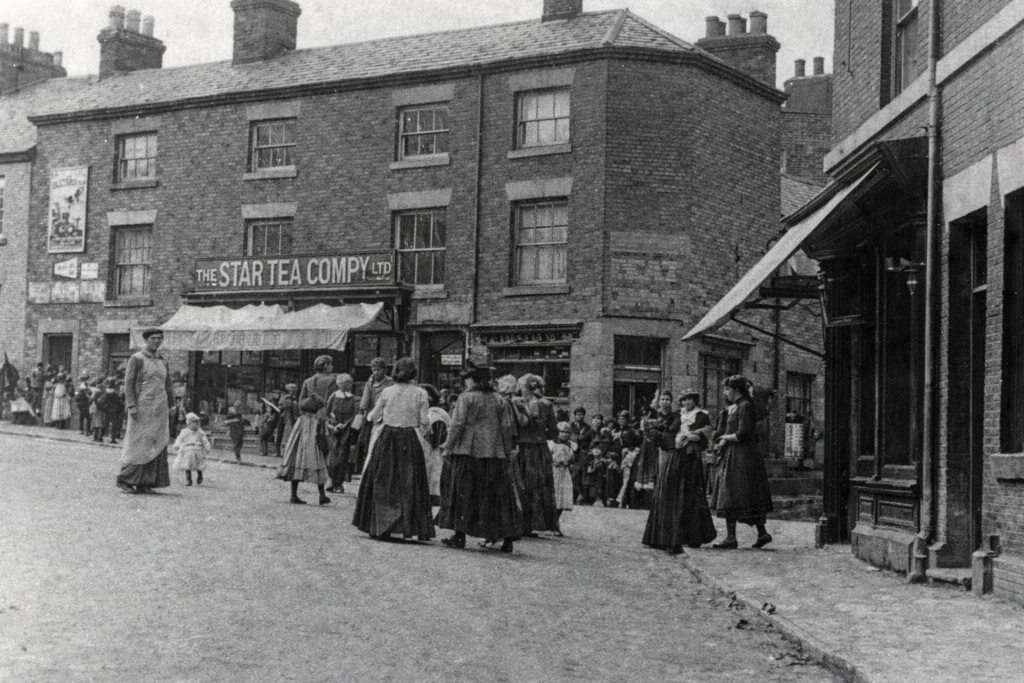
The Star Tea Company shop in Vicarage Street before the business moved to the Market Place. Date and people unknown. The business was founded in Manchester in 1873 by Joseph Cadman and James Fish as the Star Tea Company. In 1922 the company, which by then had built up a chain of over 300 shops, bought Ridgways, a leading blender. In 1929 Star Supply Stores was acquired by the International Tea Co. Stores.
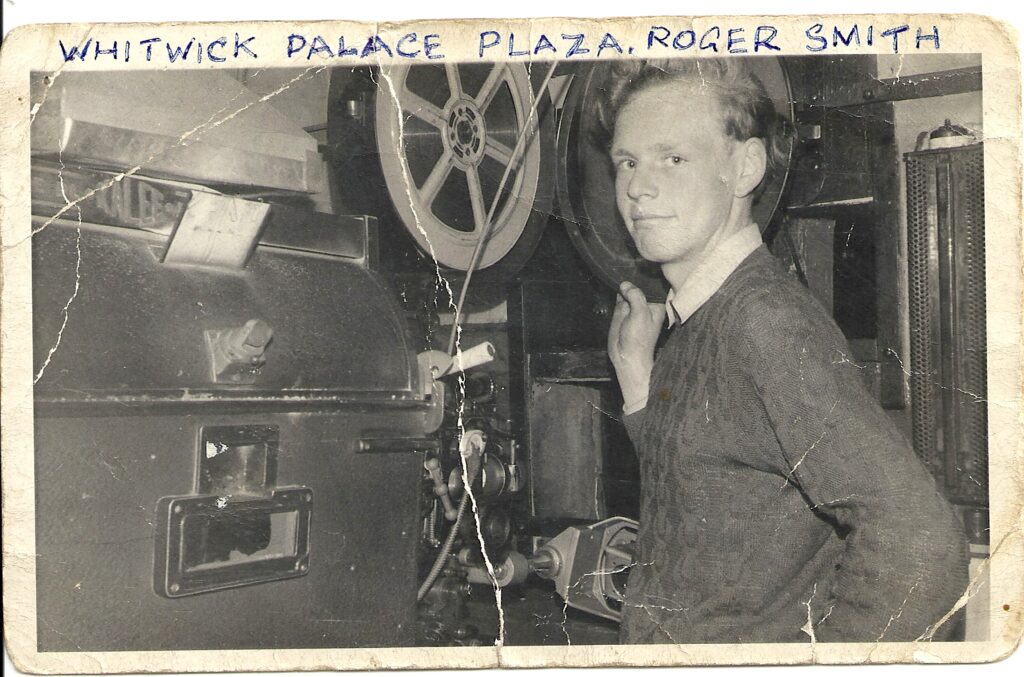
The photograph shows Roger Smith standing besides one of the film projectors at The Plaza. The date of this photograph is not known.
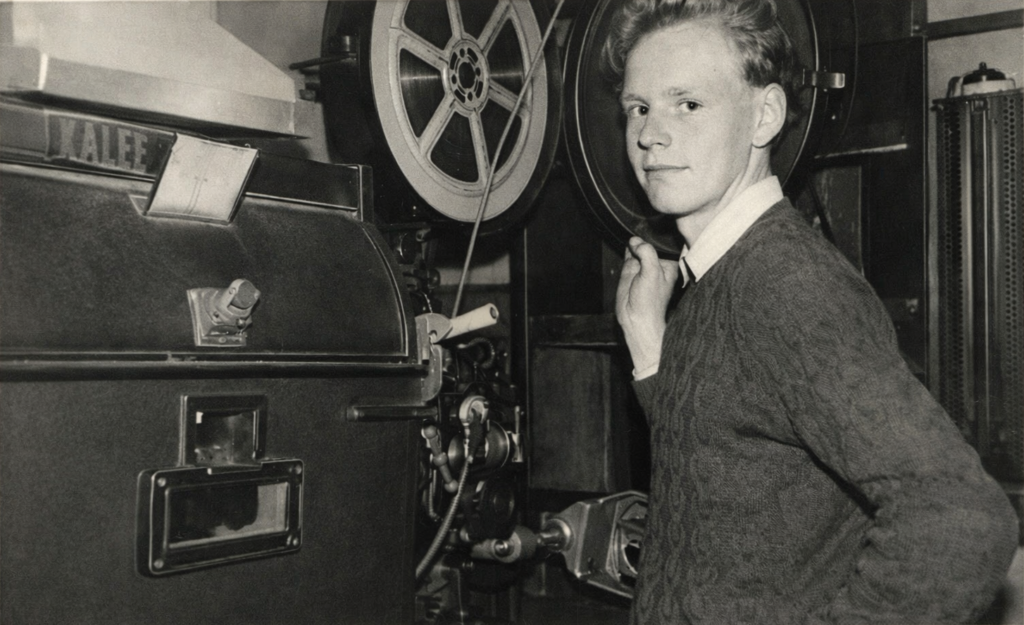
Whitwick’s cinema opened in Silver Street in December 1914 and was known as The Picture House. In 1925, the Picture House became The Palace. The era of silent films ended in August 1930 when the “talkies” arrived in Whitwick. The cinema’s name changed again in 1951 when it became The Plaza and this is how it is remembered by many locals. The final era began in 1963 with the introduction of Bingo on some evenings. In the 1970s, The Plaza became a Bingo Hall and no longer a cinema. The building was destroyed by fire in 1982.
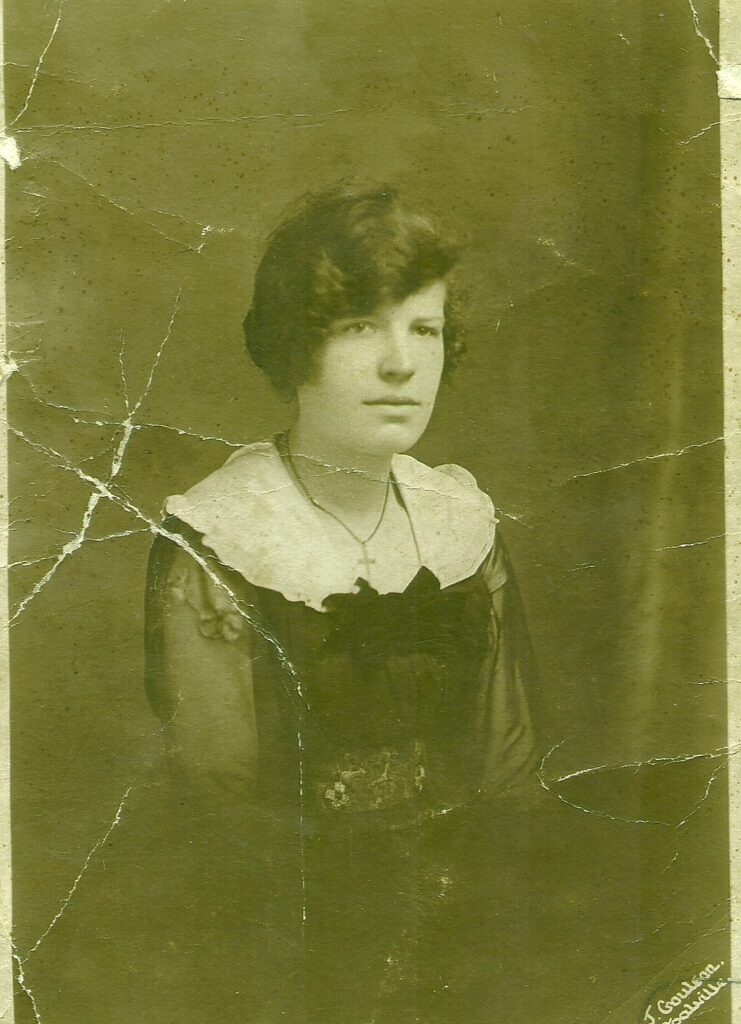
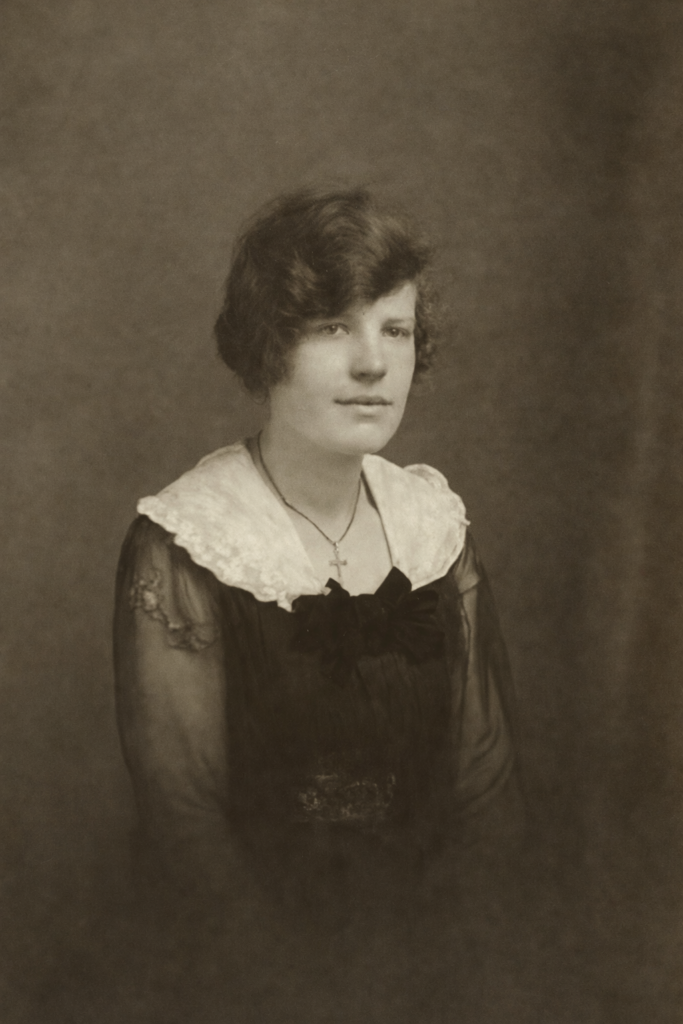
Emily Perry. Date unknown. The photographer was John Goulson. Studio shots were taken at Belvoir Road in Coalville, some outside images were taken at the rear of the premises whilst others were taken at a variety of schools, sports clubs and churches/chapels throughout the Coalville area. After John died in 1930 his daughter Elsie continued the business, probably until the late 1930’s.
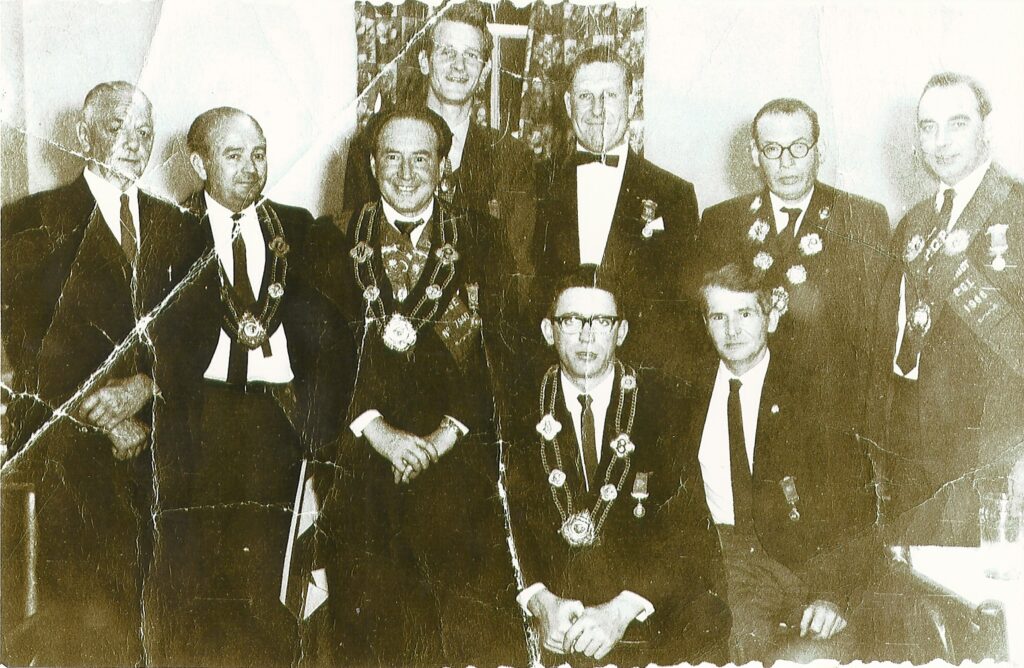
Royal Order of Buffaloes c.1970. Jim Cufflin, Pat Campbell, Barry Wardle, Stan Shipstone, Rowland Richards, Horace Robinson, Ted Moseley. Others unknown.
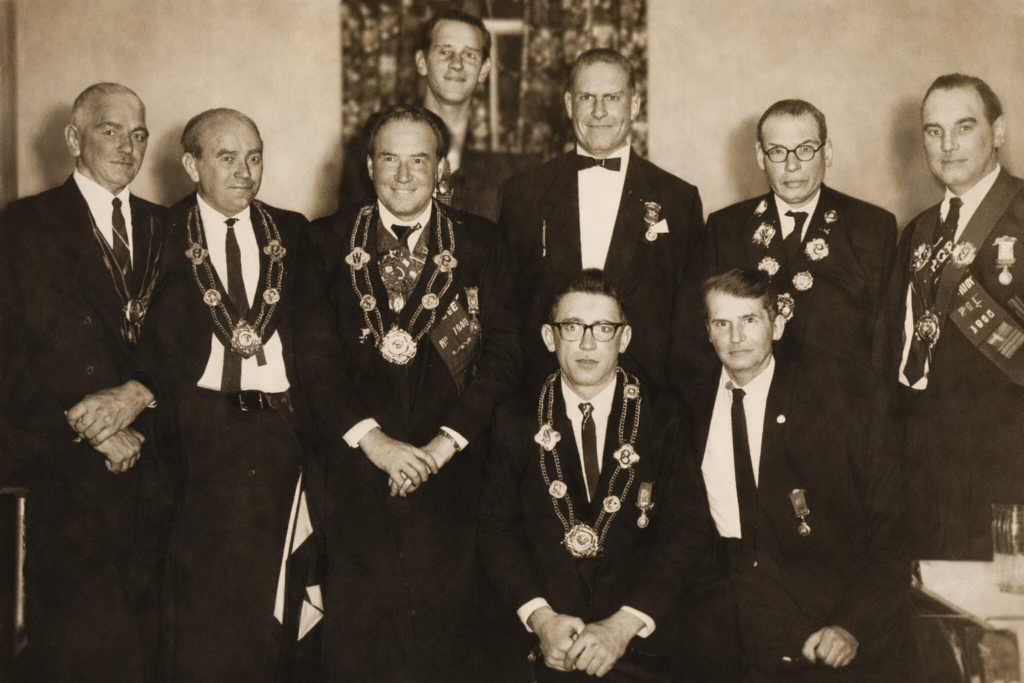
The Royal Antediluvian Order of Buffaloes (RAOB) is a historic fraternal organization founded in 1822 in England, focused on camaraderie, charitable work, and ritualised social gatherings. It was established in August 1822 at the Harp Tavern in London by Joseph Lisle, an artist, and William Sinnett, a comedian. The aim was provide social support and entertainment for working-class men who lacked access to social services or community networks at the time.
Rosemary and Harry Moore on a fairground ride at Whitwick Wake around 1950.
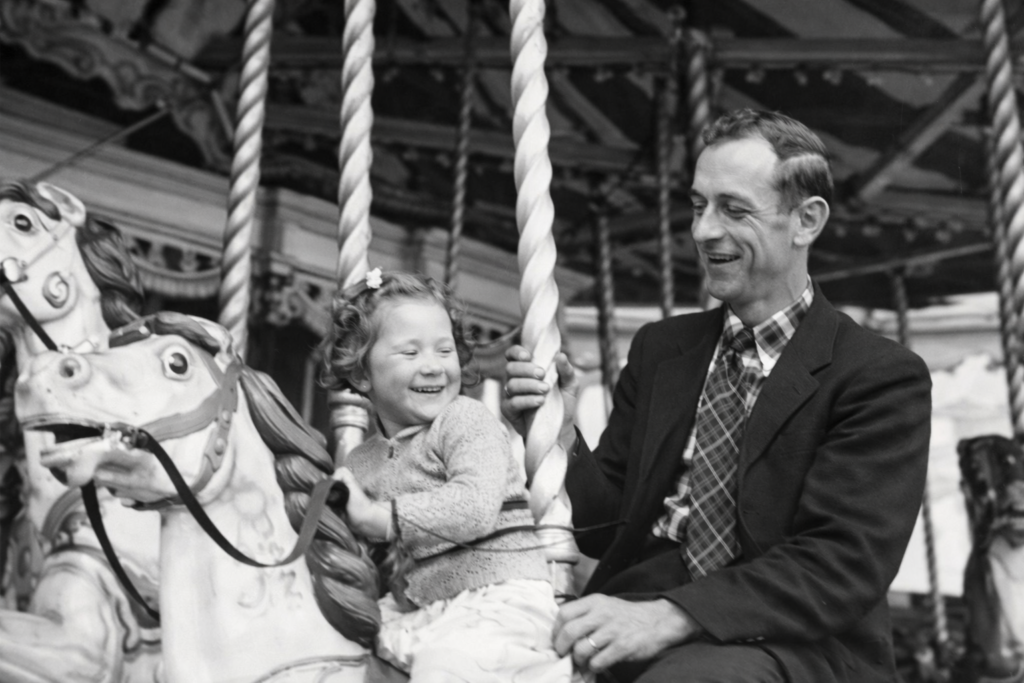
In 1293 Whitwick’s Lord of the Manor purchased a Charter from Edward I. This allowed a market to be held in the village and an annual fair which lasted for four days in June at the feast day of St John The Baptist. This became Whitwick Wake when a travelling fair came to the village. It was very popular and attracted visitors from a wide area.
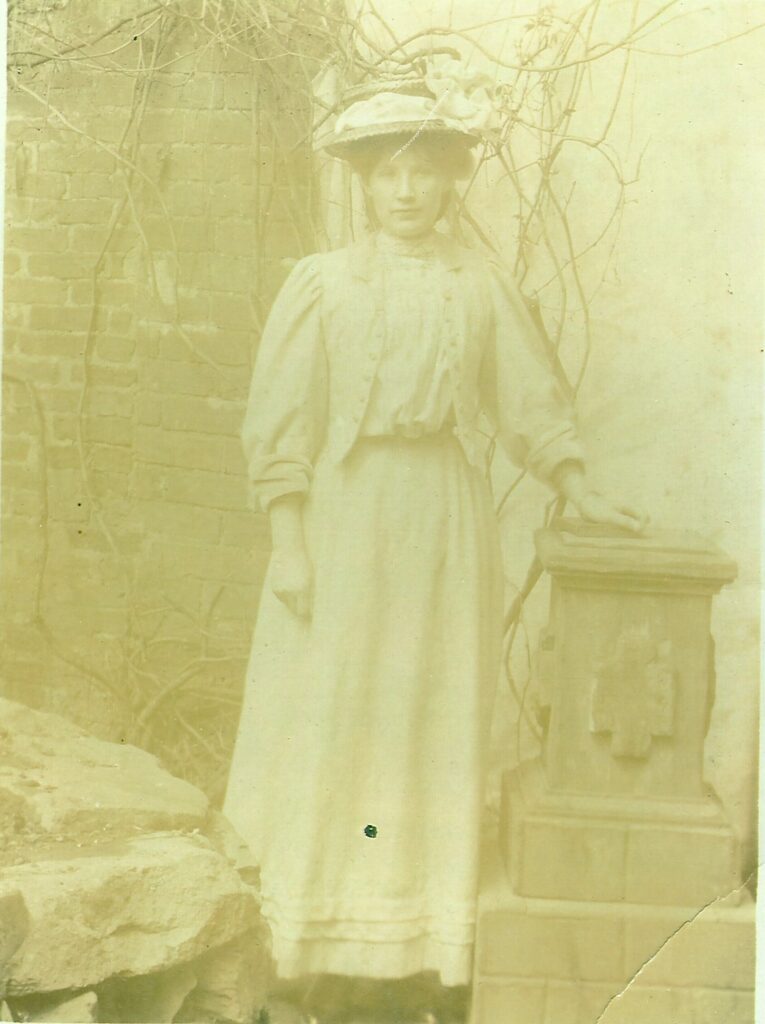
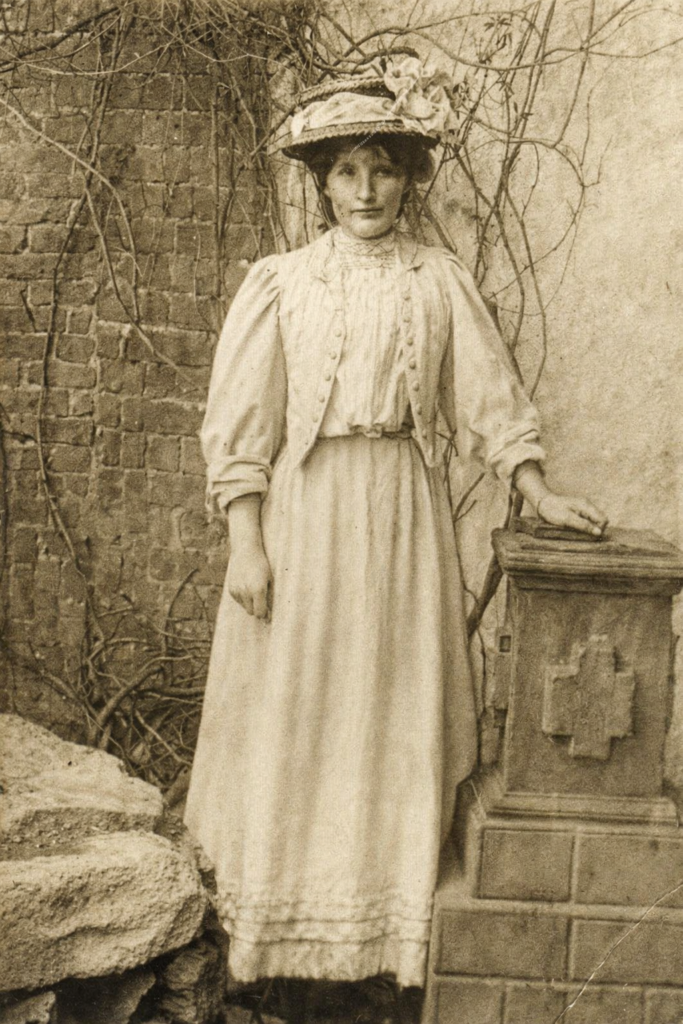
All that is known of this photograph is the note on the back which says “Mrs Haywood (friend of Martha Briers)”. Date unknown
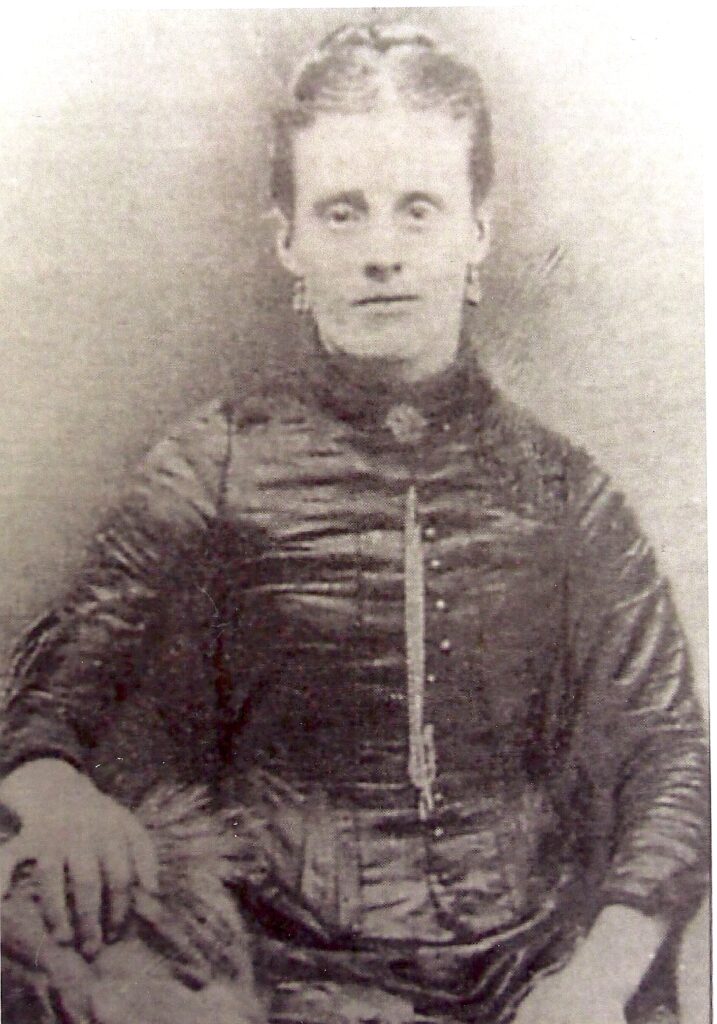
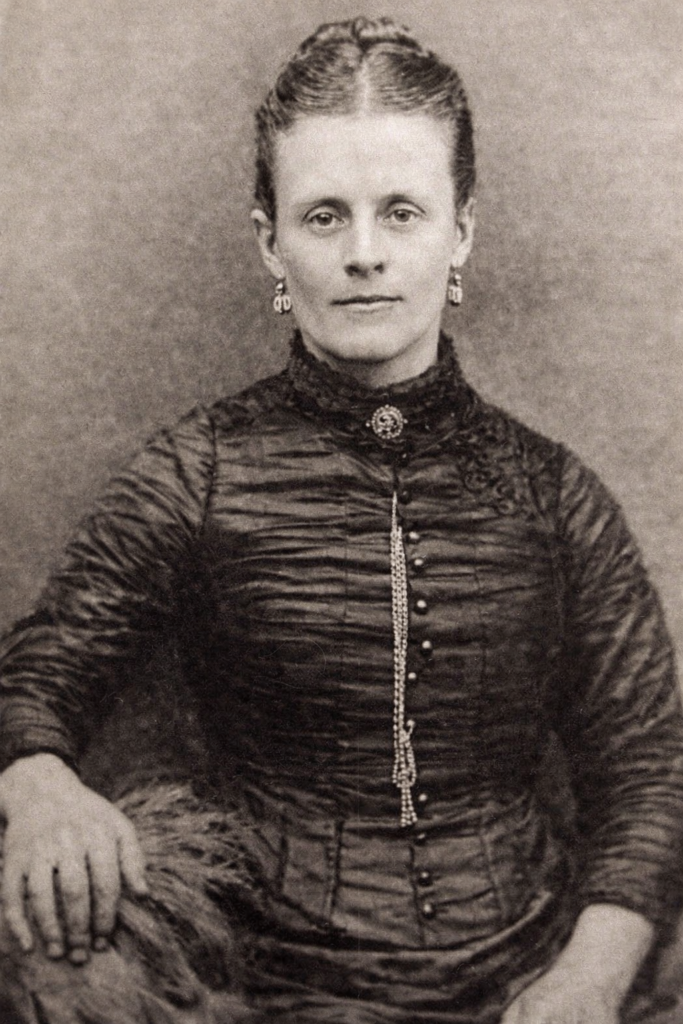
Hannah Wilson, widow of Joseph Wilson, who died in the Whitwick Pit Disaster on 19th April, 1898 and whose body was never recovered from the mine.
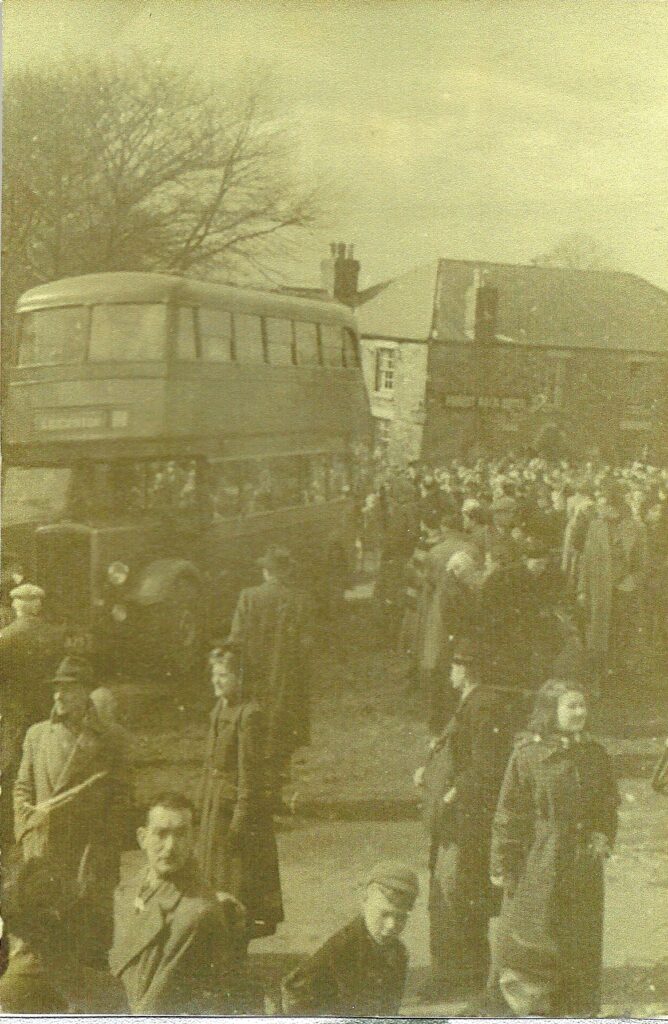
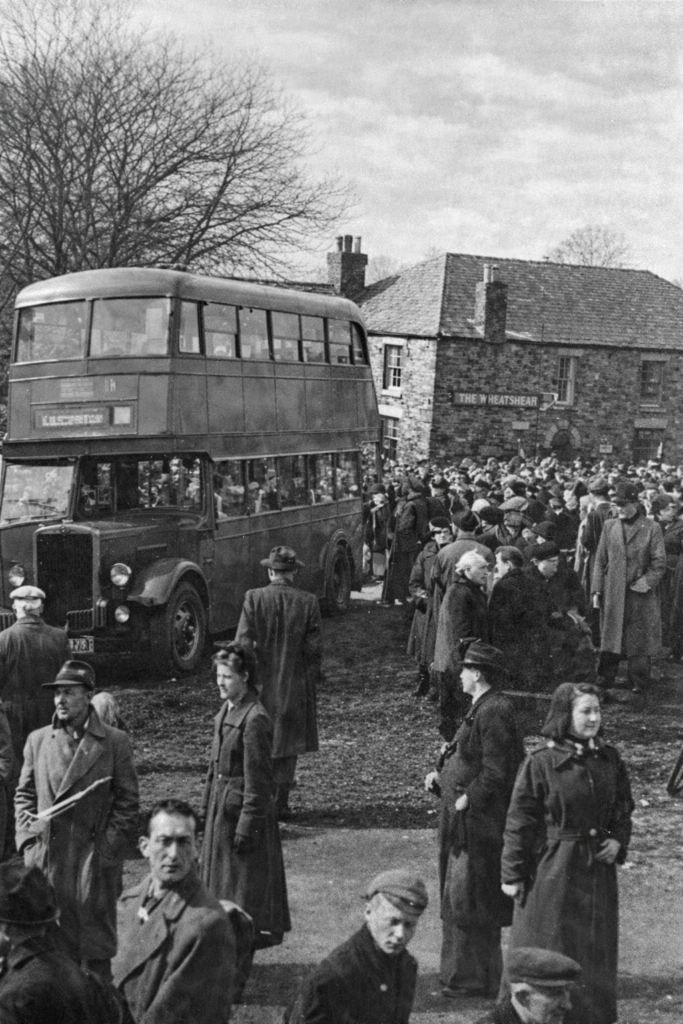
The first hunt meet after the end of the Second World War at the Forest Rock, Date and people unknown.
The Forest Rock Hotel in Whitwick, was a popular location from the 1860s onwards, being ideally suited for those visiting the nearby monastery and the wider Charnwood Forest.
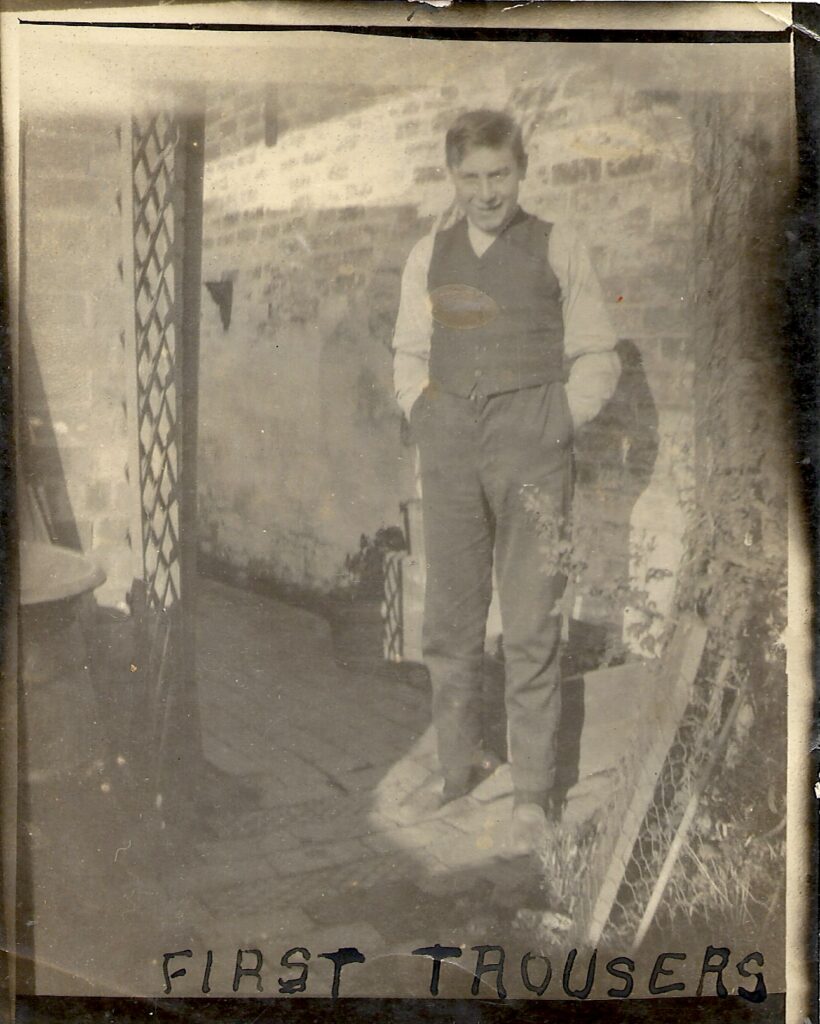
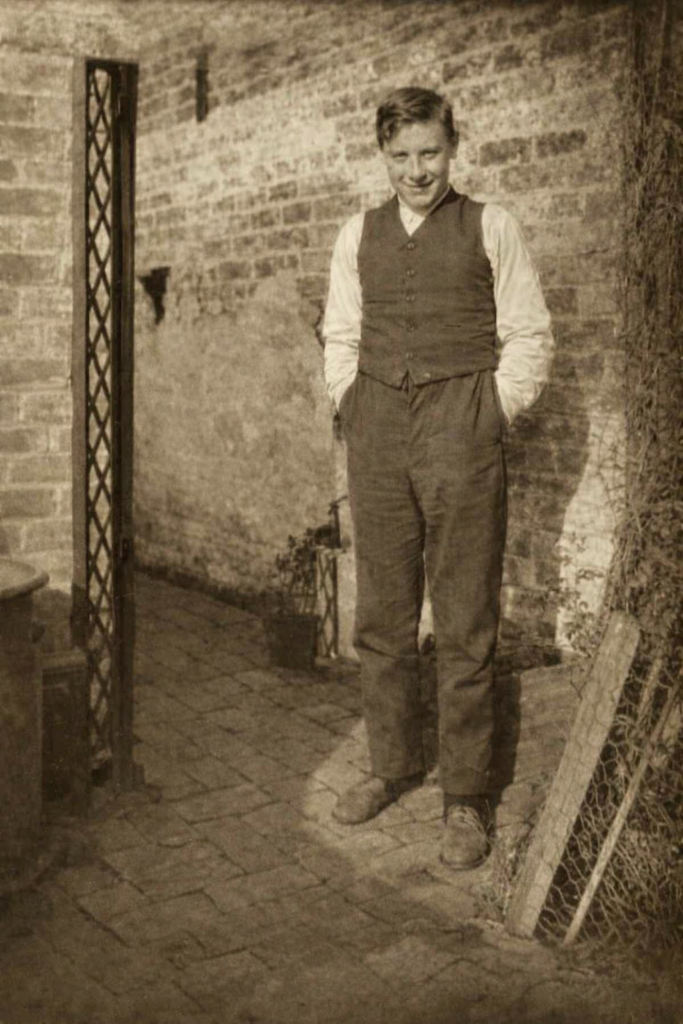
Norman Greasley, later the barber in Silver Street. Written on the photograph are the words “First Trousers”. Date and location unknown.
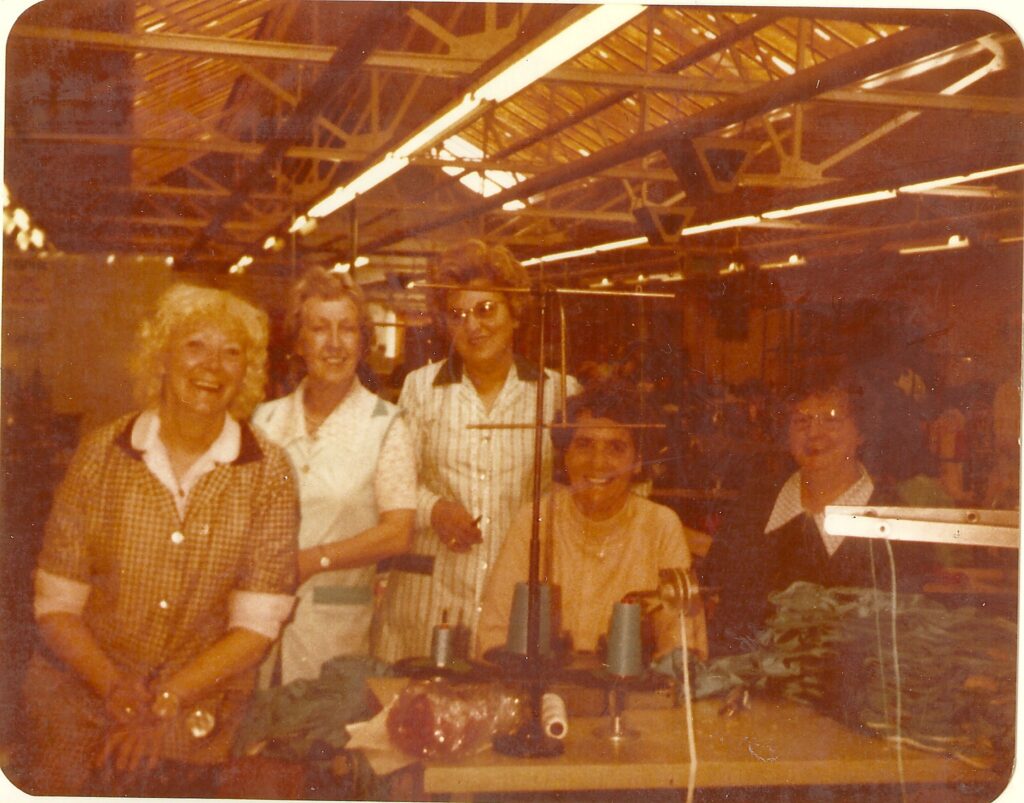
Inside the factory at the Dumps in the 1970’s. The company was Northgate and pictured are Edna Collis, Audrey Harrison, Clarice Brewin, Evelyn Roberts and Margaret (Peggy) Wheely.
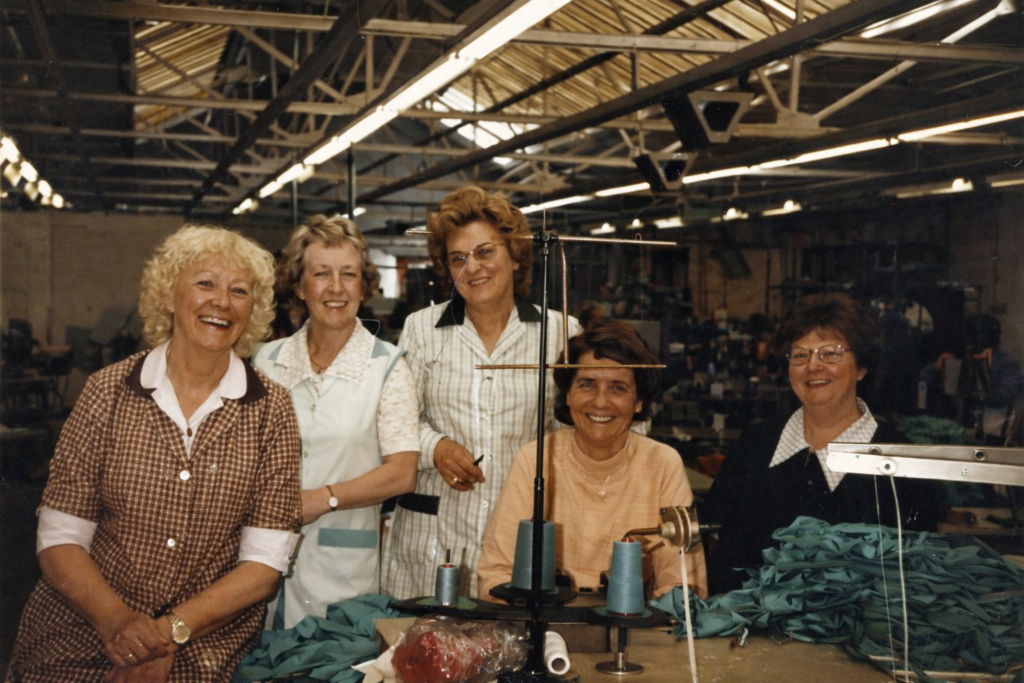
A factory was built on North Street next to the junction with The Dumps Road in 1915 and was initially a hosiery factory, Handford & Millers. Other companies such as Whitwick Elastic Mills (WEM), Collapsible Tubing were there during the Second World War, manufacturers of foundation garments and swimwear and several units belonging to the Courtauld Group, followed by Granby Garments and Eveden were also the occupiers during the lifetime of the building. The building was closed and knocked down to make way for housing in 2007.
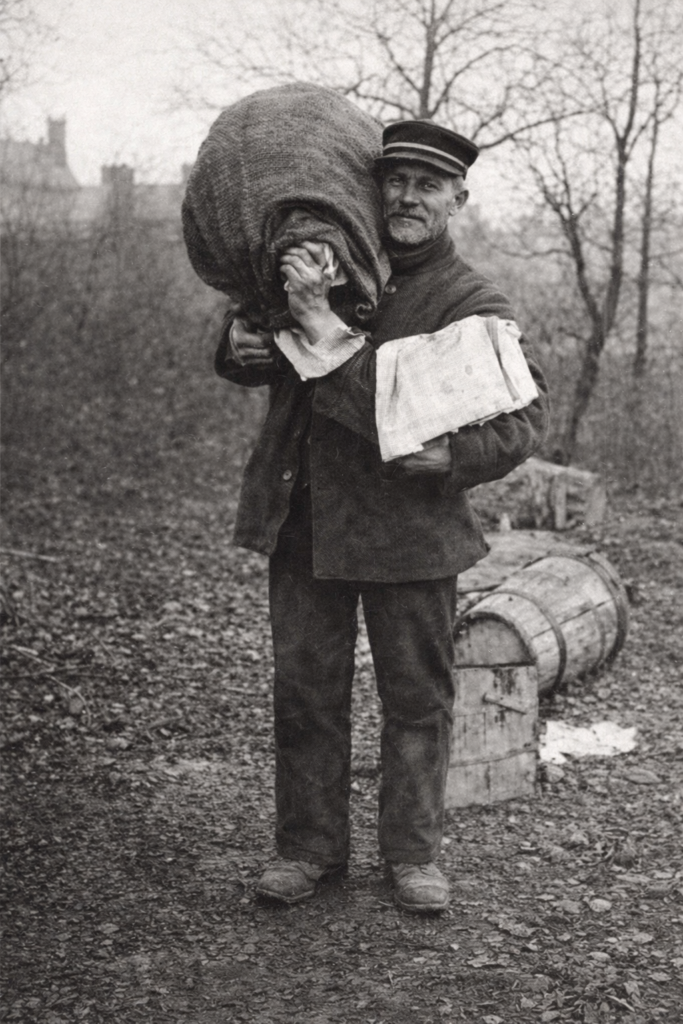
Mr Tommy Dodds burning “heathen” literature after ‘finding God’. Photograph was taken on Castle Hill, Whitwick, March 1908. Photograph donated by John Colledge.
Tommy Dodds was an old herbalist who used to live in Vicarage Street opposite Mr Glynn’s shop.
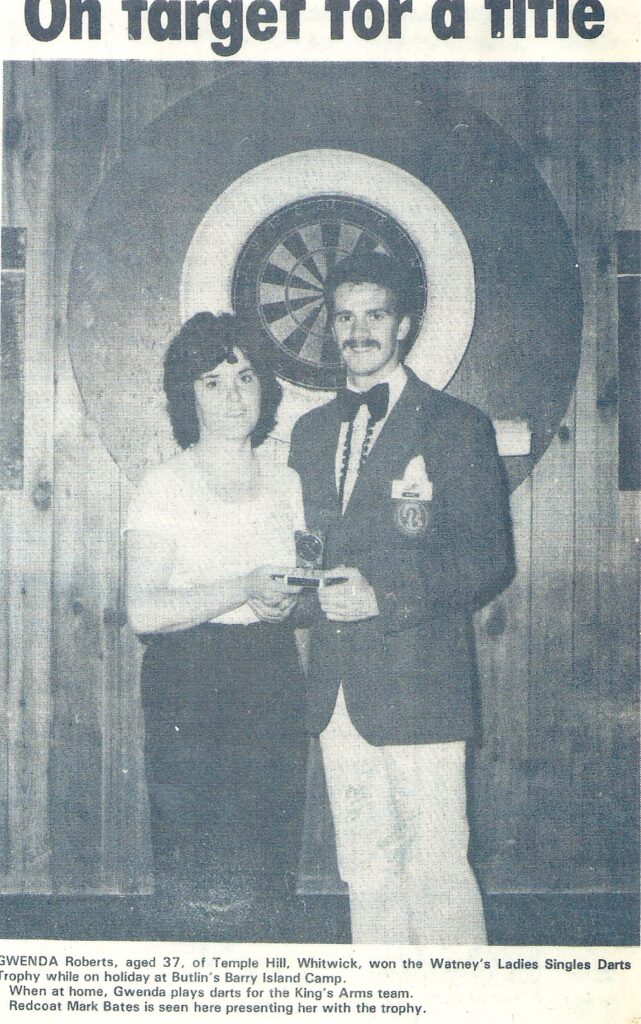
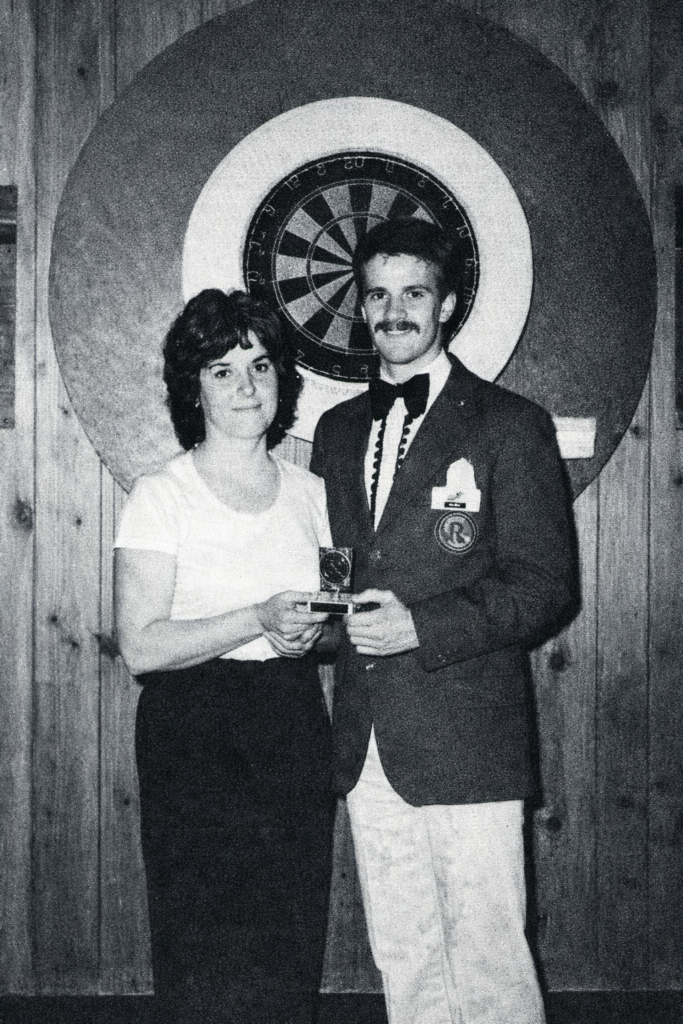
This image is from a newspaper cutting and says, “Gwenda Roberts, aged 37, of Temple Hill, Whitwick, won the Watney’s Ladies Singles Darts Trophy, while on holiday at Butlins Barry Island Camp. When at home, Gwenda plays darts for the Kings Arms team. Redcoat, Mark Bates is seen here presenting her with the trophy.” The photograph was taken in 1978. Her son, Dave Roberts remembers watching her win, but he and his sister were not allowed into the room where the competition was taking place and had to watch through the glass doors.
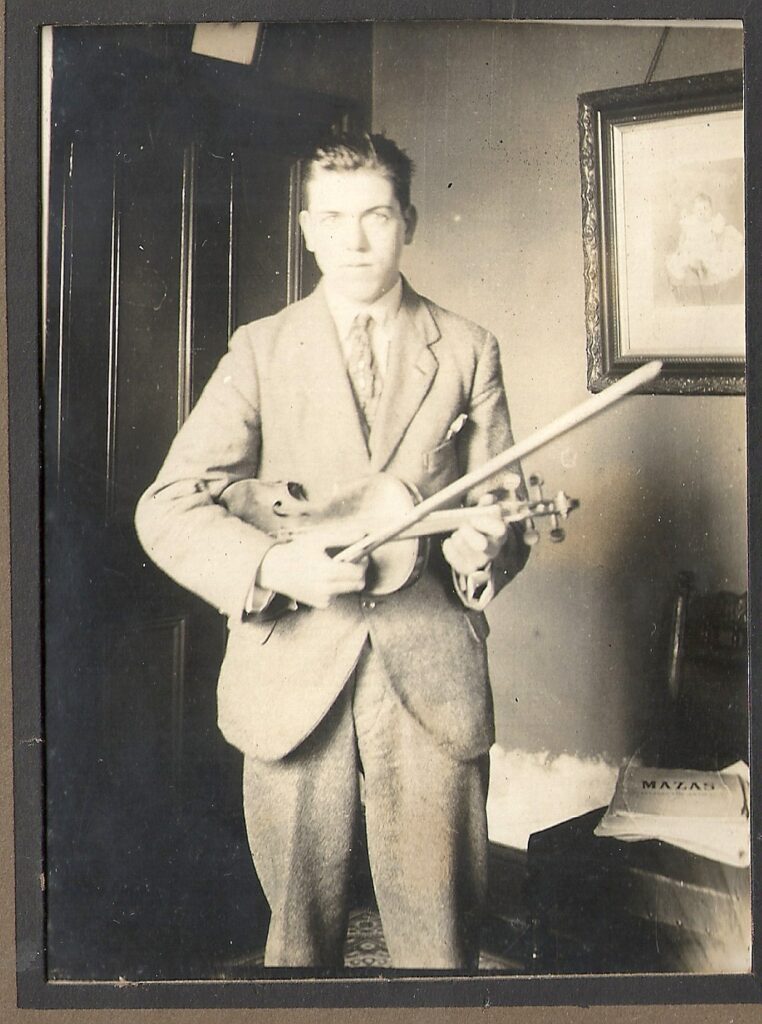
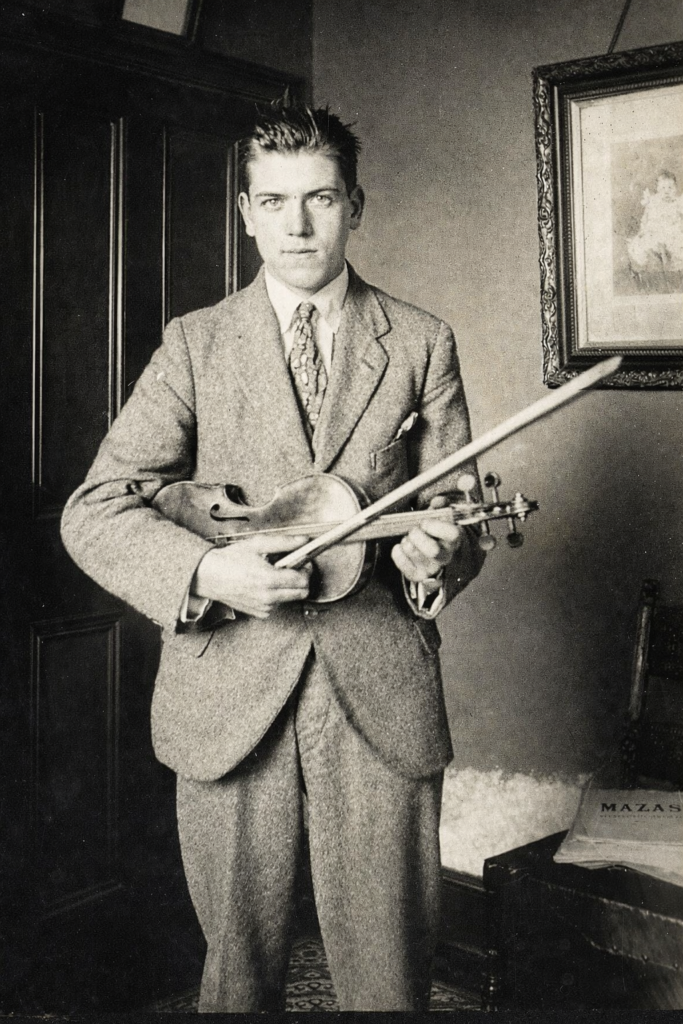
Wilfred Vesty who lived at 61, Hermitage Road with his wife Winifred. They are both buried at Whitwick Cemetery. Wilf played the violin, was a Bevin Boy, a member of Toc H and Whitwick Baptist Church. Donated by Muriel Smith of 63, Brooks Lane.
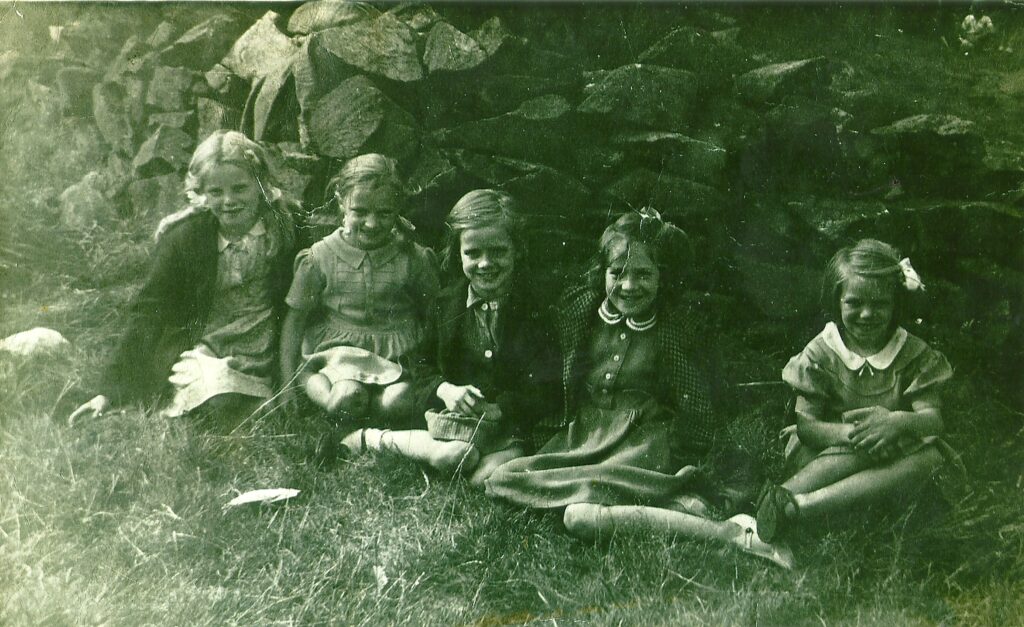
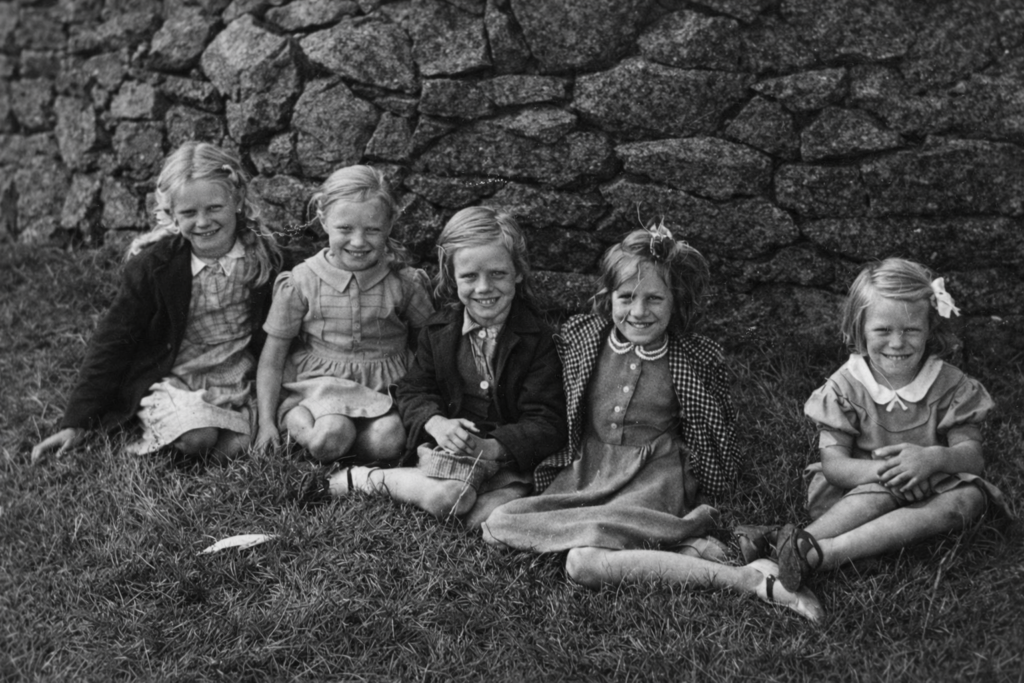
Pauline Haynes, Carol Parker, Nancy Brown, Ruth Bakewell, Pauline Cartlidge at Spring Hill c.1946. Donated by Pauline Haynes
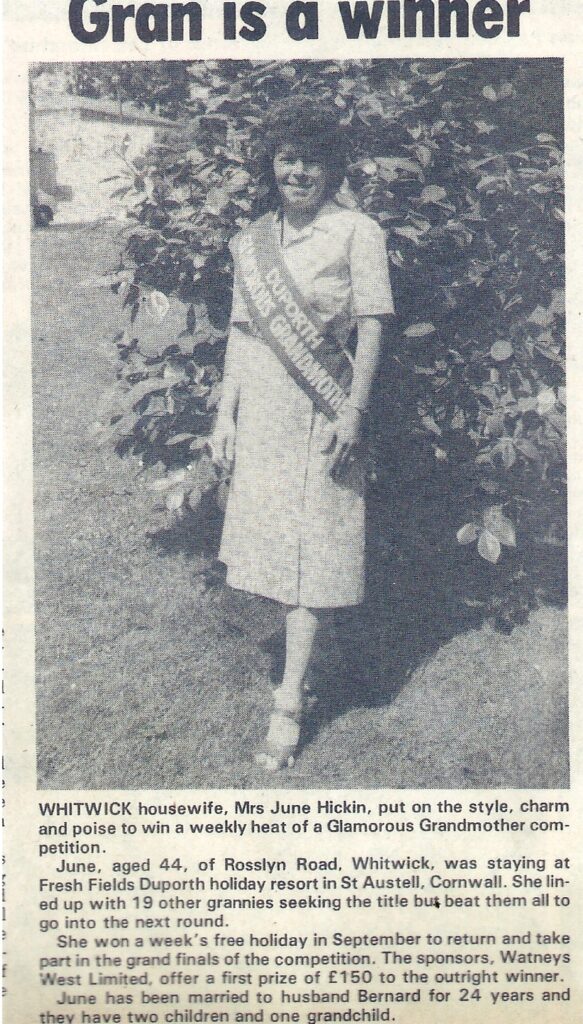
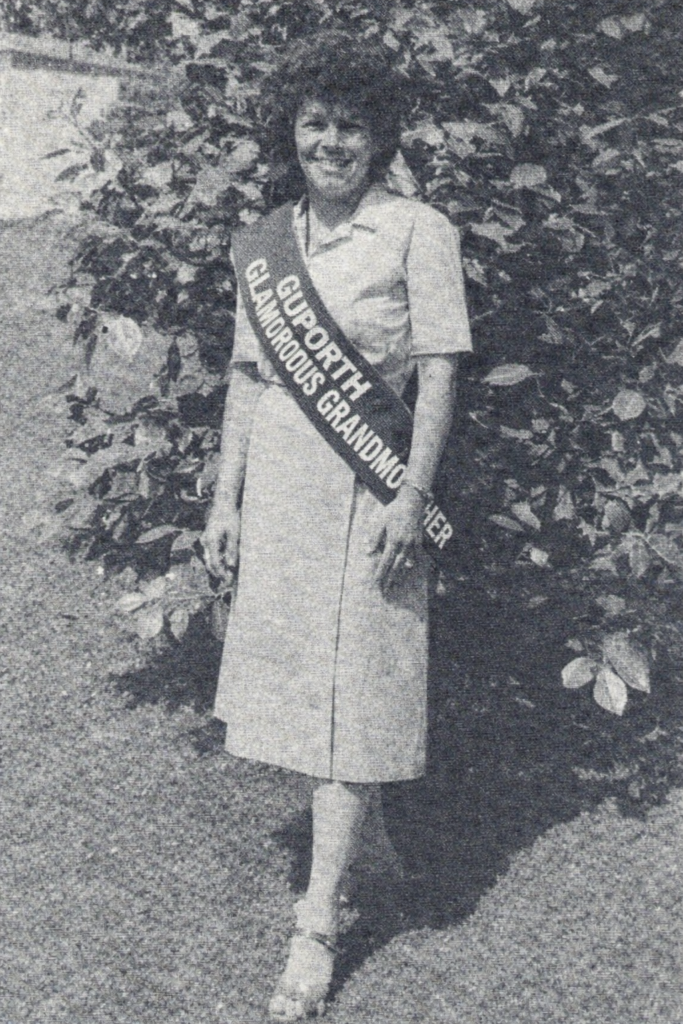
Gran is a Winner – This is the headline from a newspaper cutting for which we don’t have a date. The caption reads “Whitwick housewife, Mrs June Hickin, put on the style, charm and poise to win a weekly heat of a Glamourous Grandmother competition. June, aged 44, of Rosslyn Road, Whitwick, was staying at Fresh Fields Duporth holiday resort in St. Austell, Cornwall. She lined up with 19 other grannies seeking the title but beat them all to go into the next round. She won a week’s free holiday in September to return and take part in the grand finals of the competition. The sponsors, Watneys West Limited, offer a first prize of £150 to the outright winner. June has been married to husband Bernard for 24 years and they have two children and one grandchild.”
Note: Computer program has been unable to correct the spelling on the sash.
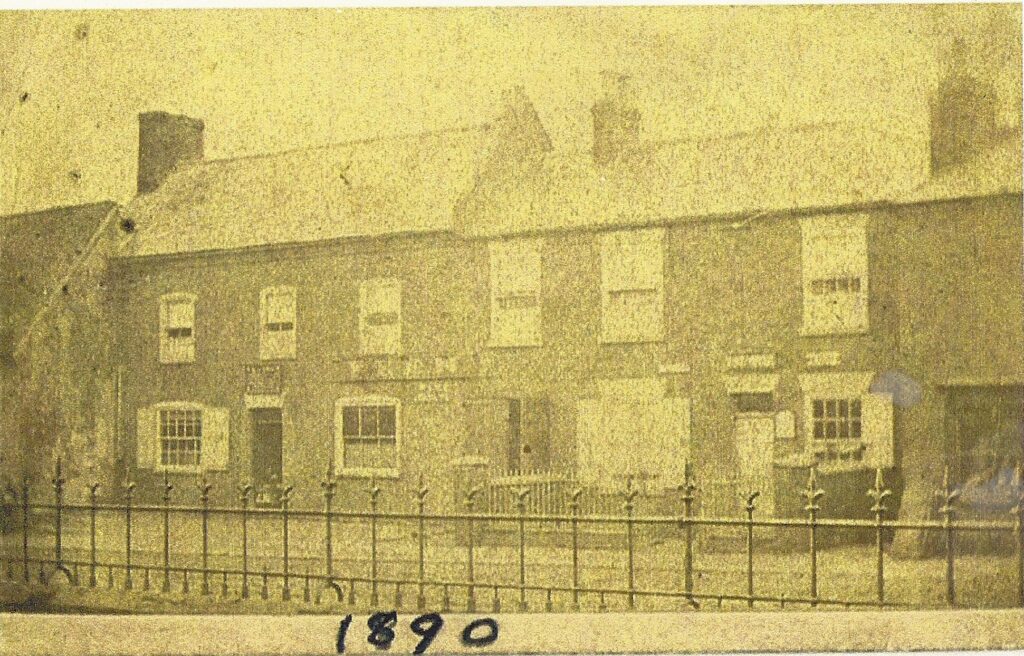
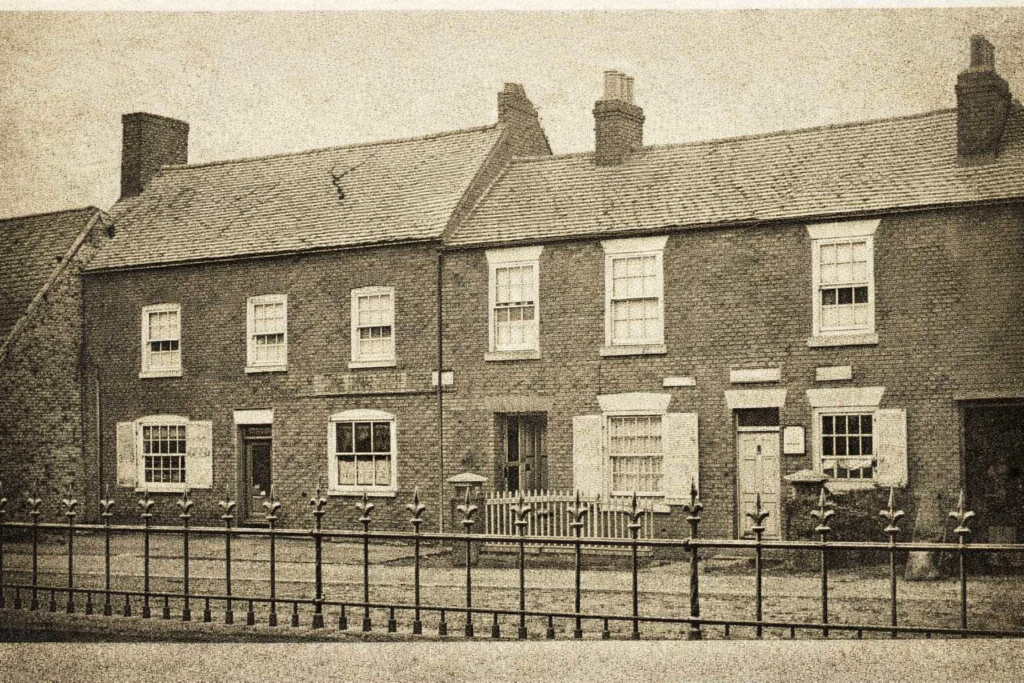
The Hastings Arms, Market Place (1890) before front porch and attic windows were added. This photograph also shows the original school fence which was replaced about 1895. On the right is Thomas Church’s shop.
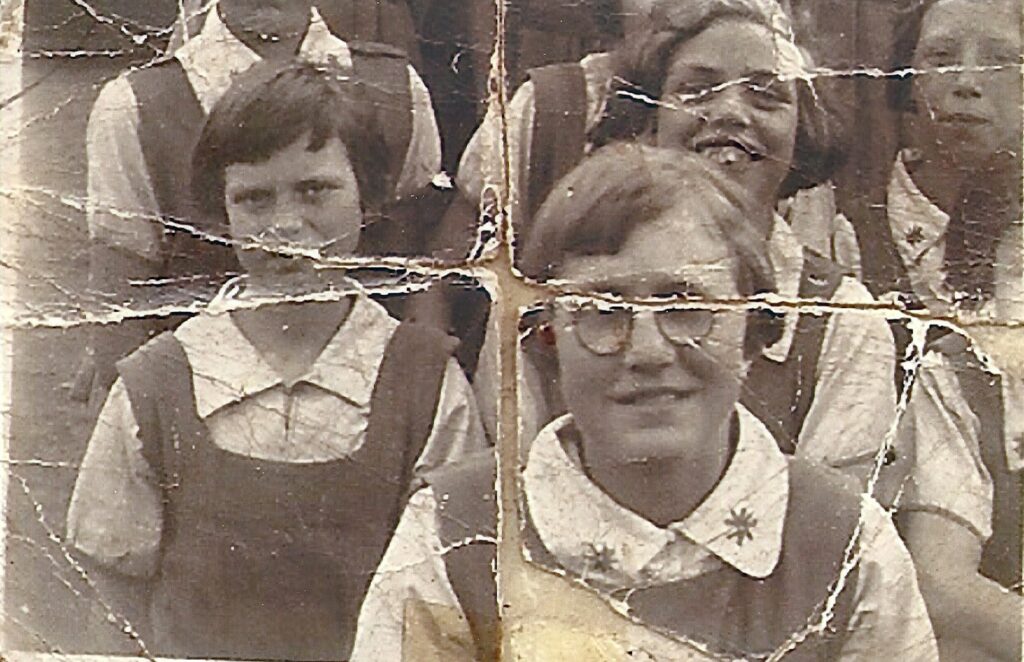
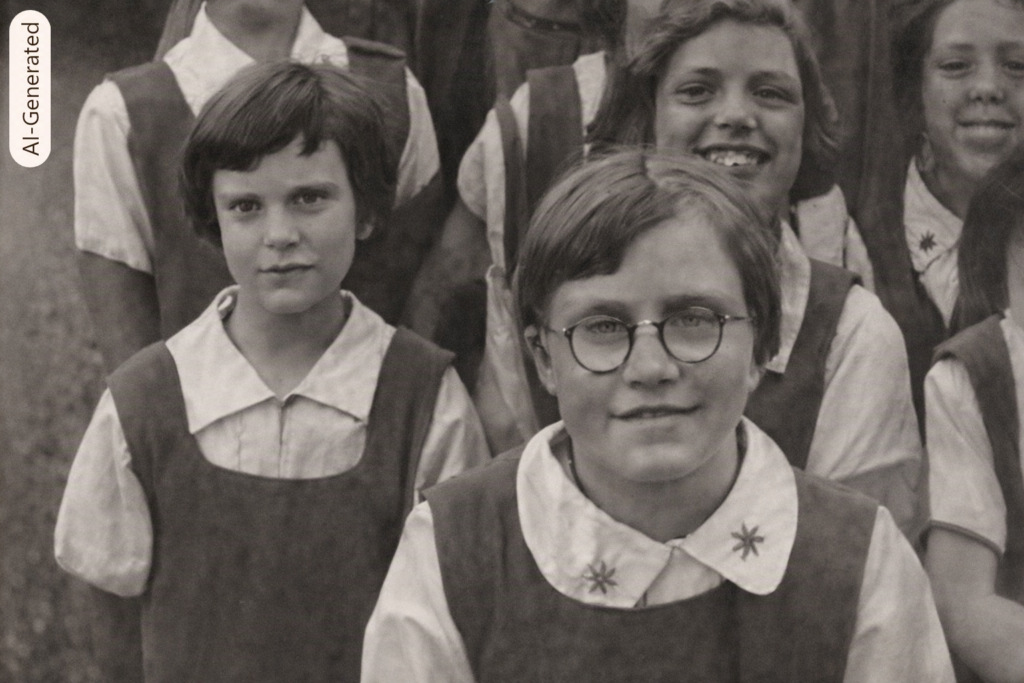
A group of girls, date unknown. Winnie Matchett, Mona Bottrill, Annie Hicken, Betty Waterfield, Kate Webster.
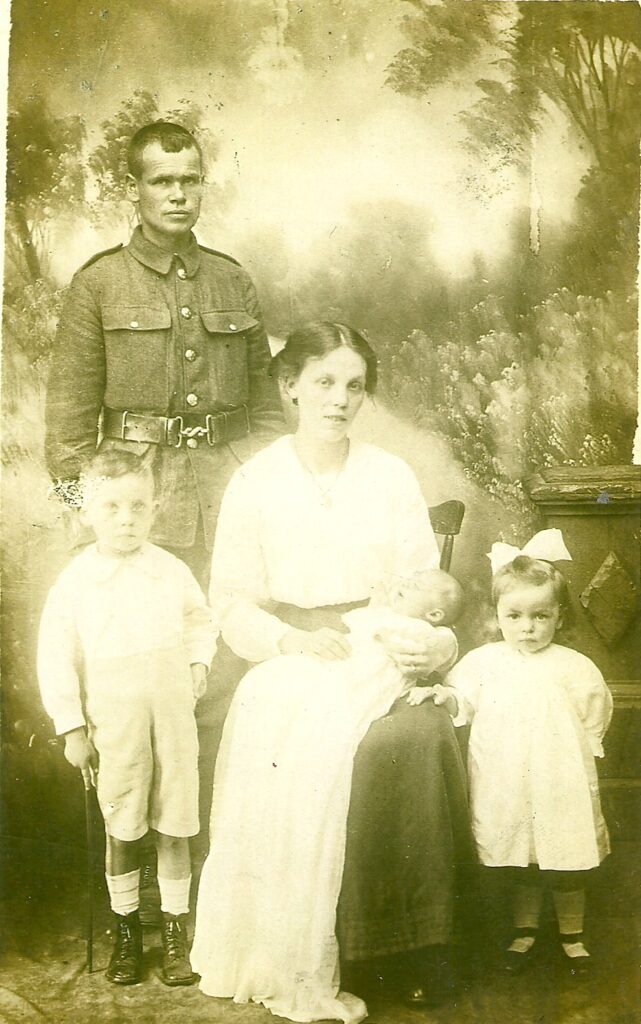
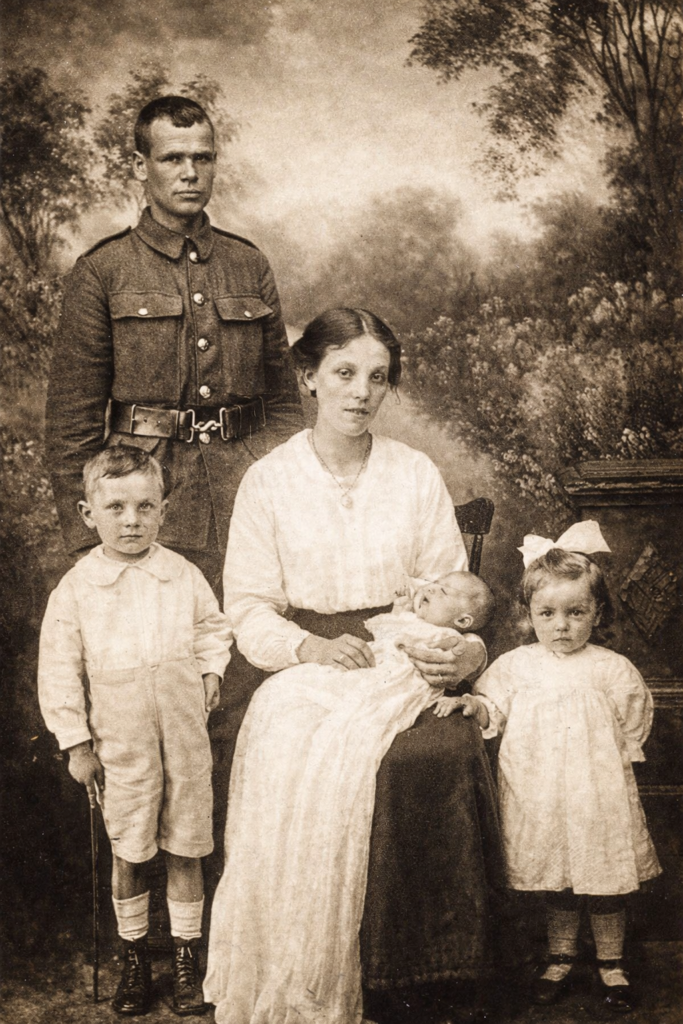
The christening of Arthur Willars Partridge. Date unknown, but the father is wearing military uniform of the First World War.
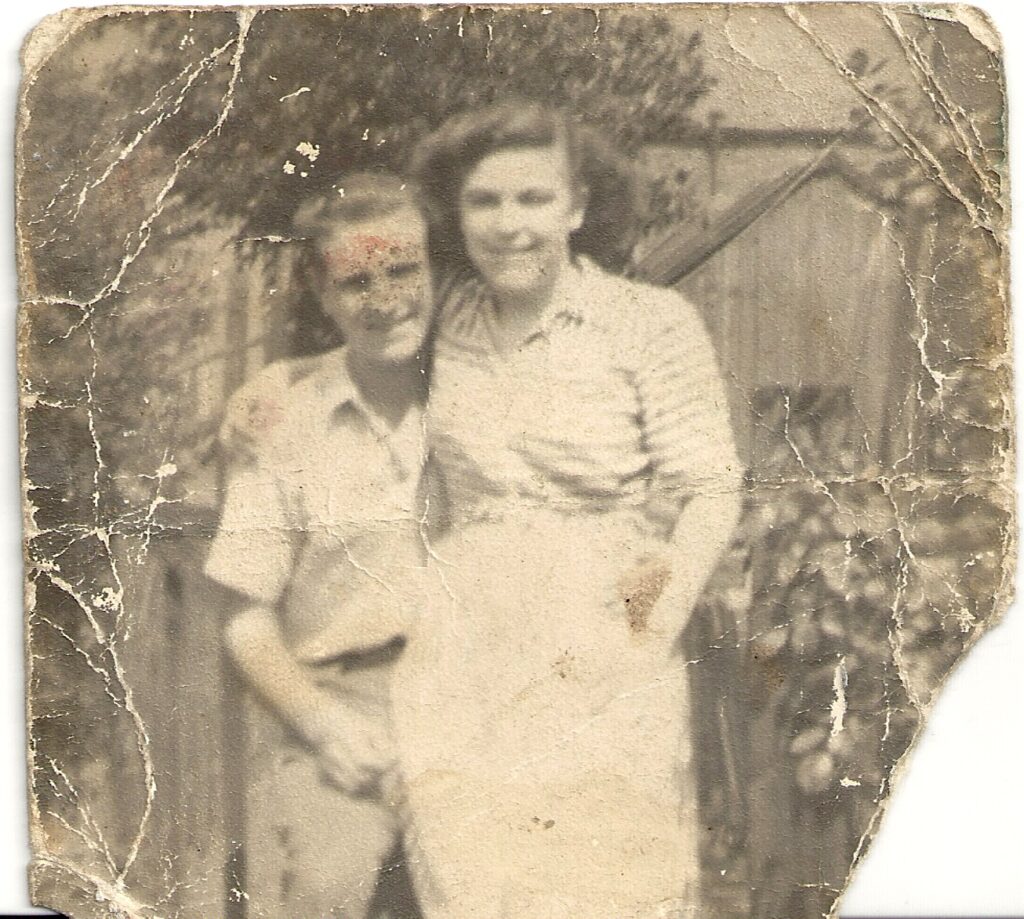
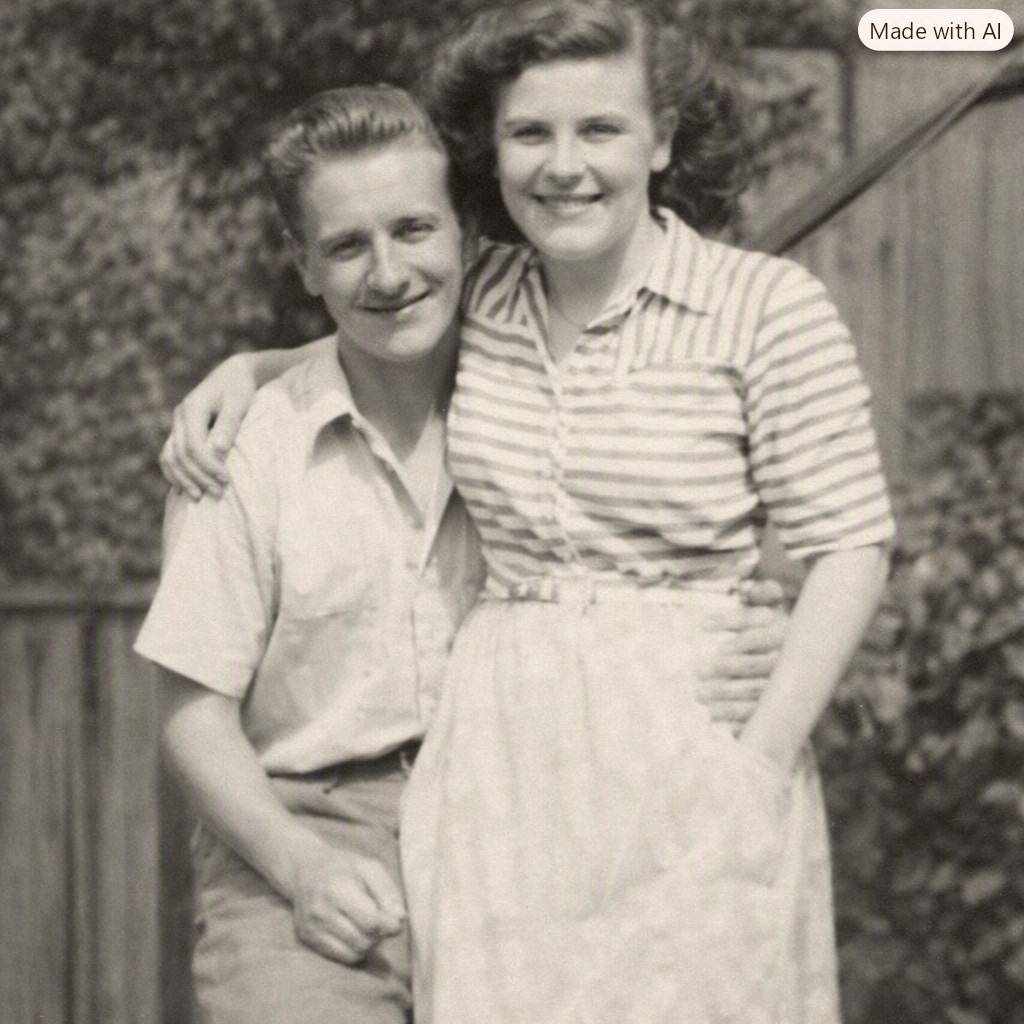
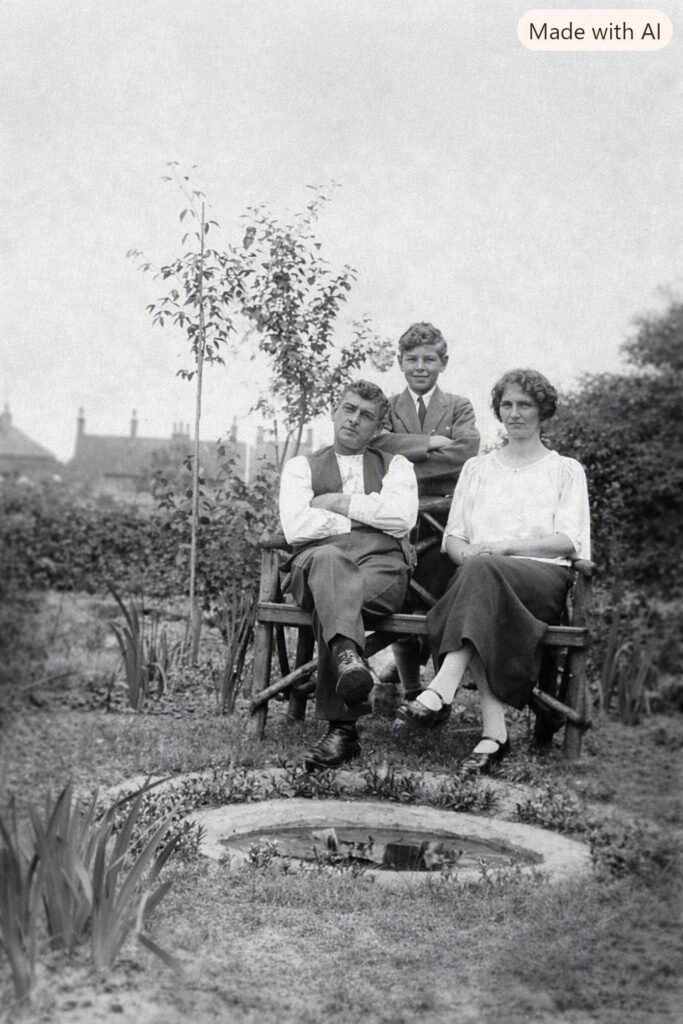
This is a badly damaged photograph for which the only information we held were the words “93 Hall Lane” which is written on the reverse. After posting on our Facebook page we have been informed that the picture is of John (Jack) Rady and his wife Edith Springthorpe.
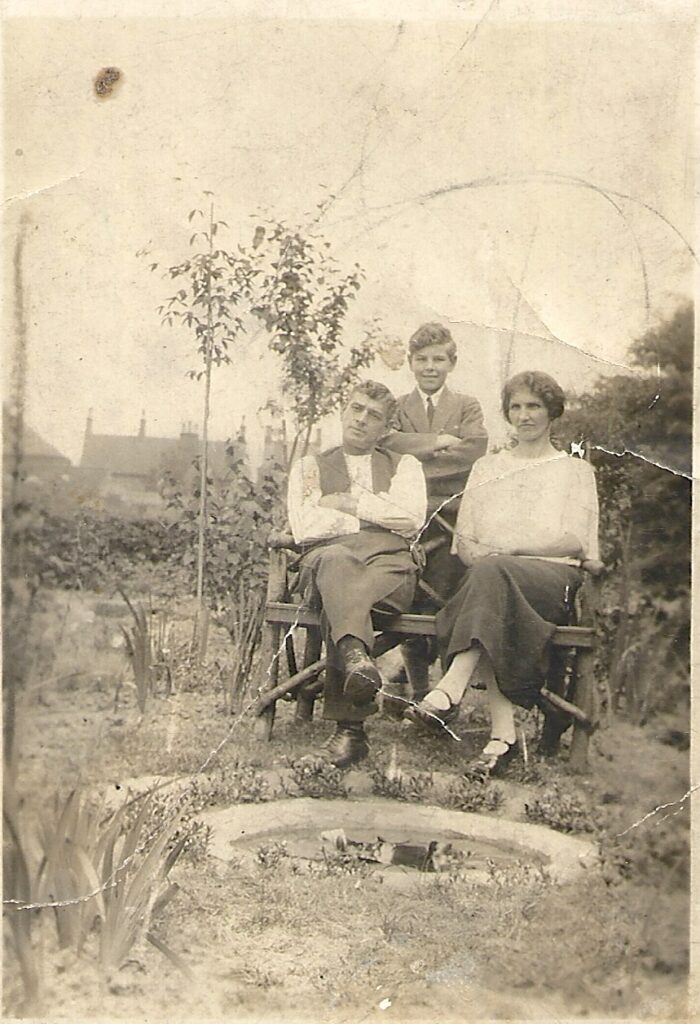
This photograph has on the reverse the words “Lizzie Cook, husband Herbert Richmond and son”. The word “cousin” is also written on the reverse of the photograph.
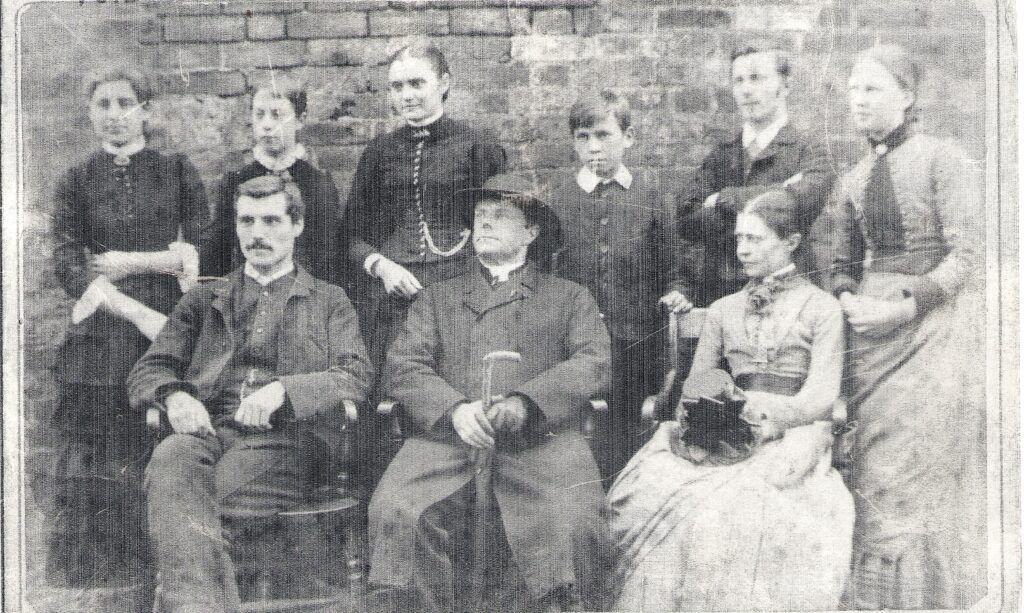
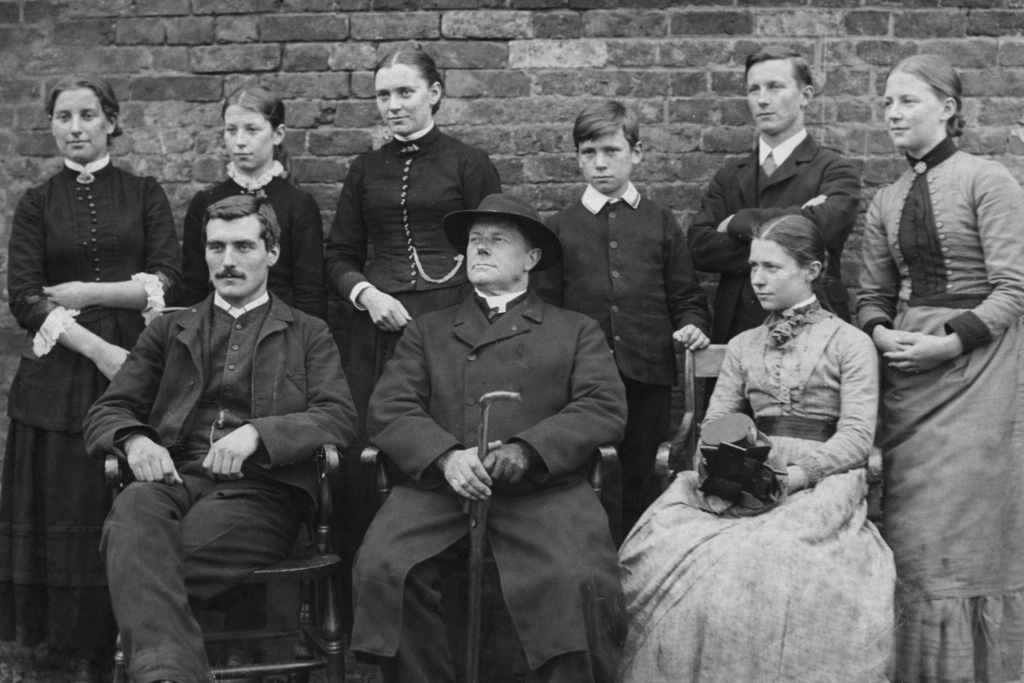
Whitwick C of E School in the Market Place. Teachers pre 1890. Back Row: Mary Marshall, Alice Fern, Miss Deane, Sidney Burton, Abel West, Mary Brooks. Front Row: Mr Cuthbert (Headmaster), Rev. Tollemache (vicar), Miss Hunt
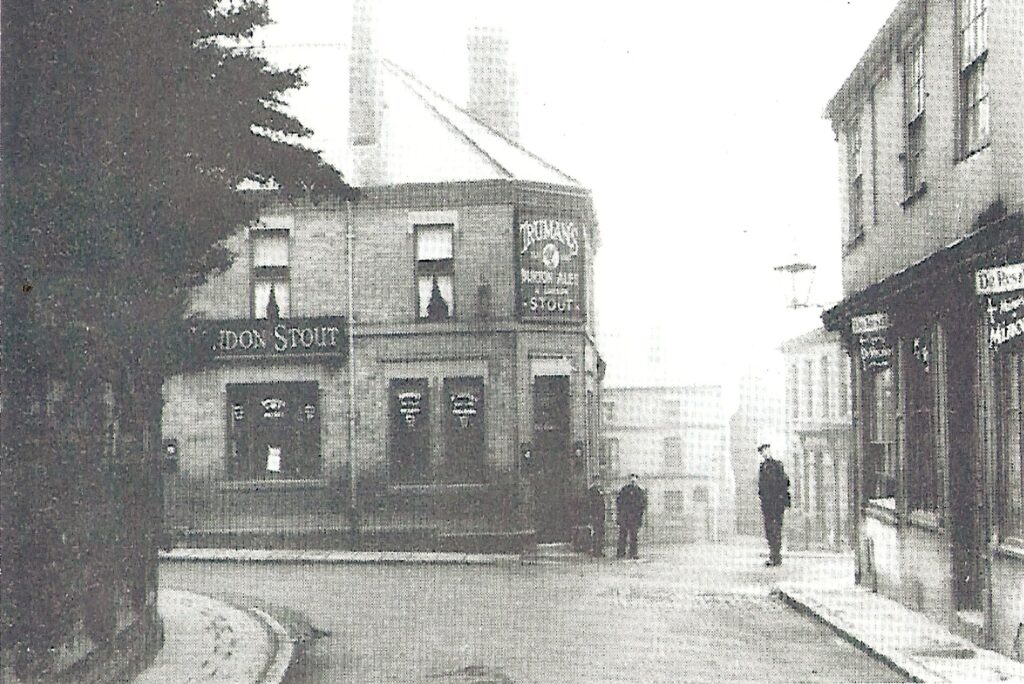
The Three Crowns in the Market Place. The side street where the gentlemen are standing is Vicarage Street and the houses at the bottom of that street are on Castle Street. The wall on the left is the local school.
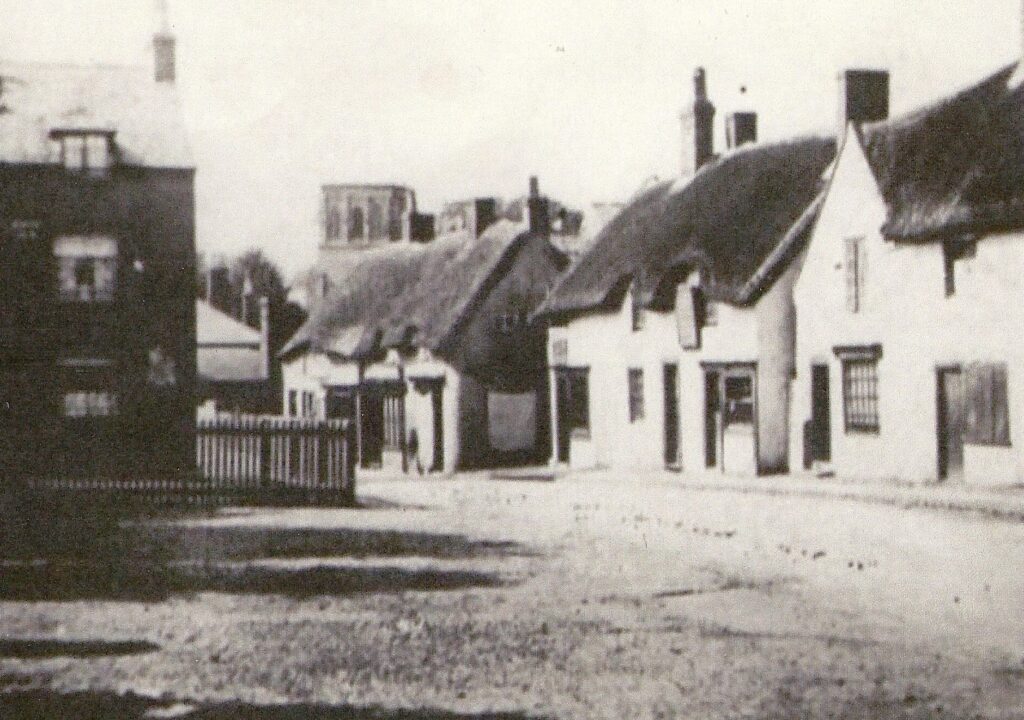
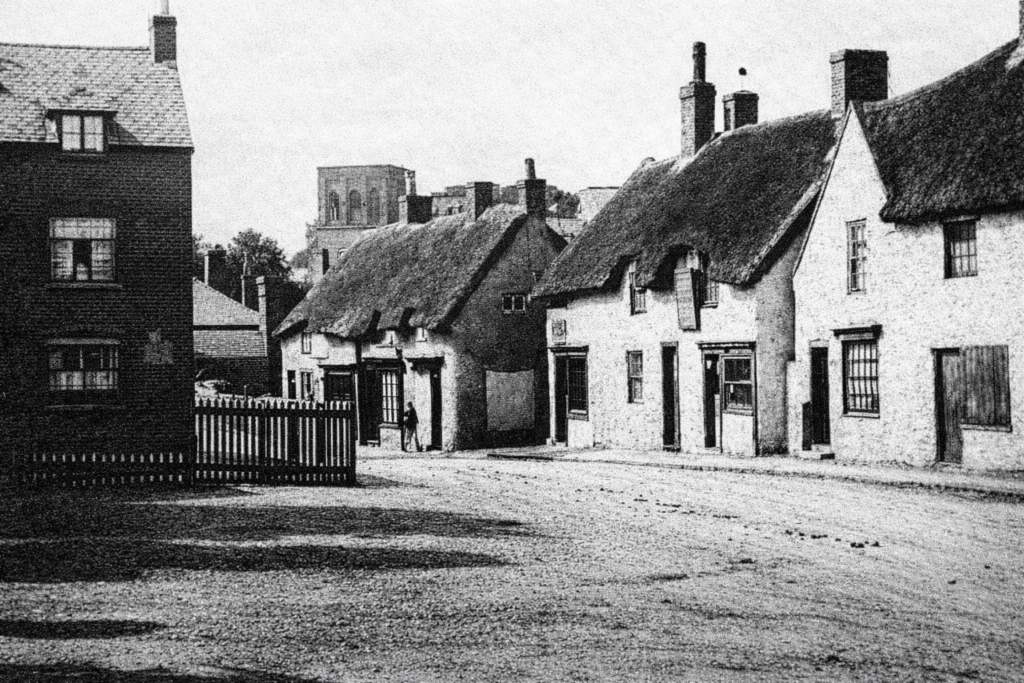
Market Place – On the left is the White Horse Inn. The centre thatched cottage is The Beaumont Arms, which was locally known as “Uncle Tom’s Cabin”. This is now the site of Whitwick Co-Op. In the background is Whitwick Parish Church.
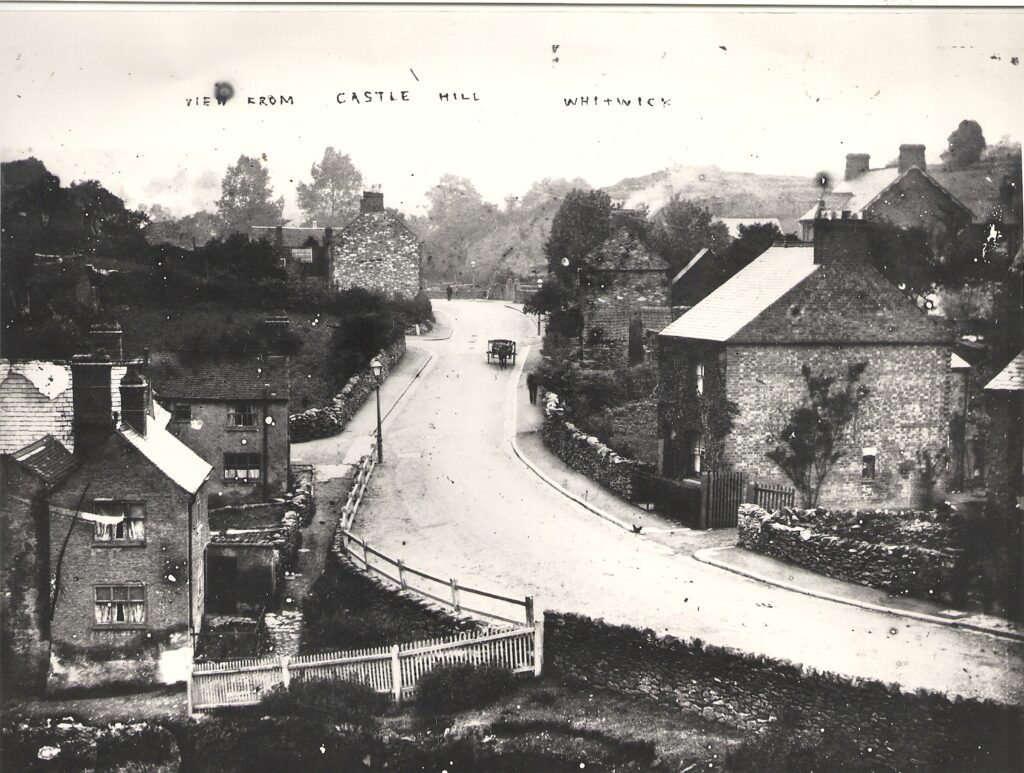
View from Castle Hill looking towards Cademan Street. Foreground view is of Castle Street, the houses on the left is where Castle Garage now stands.
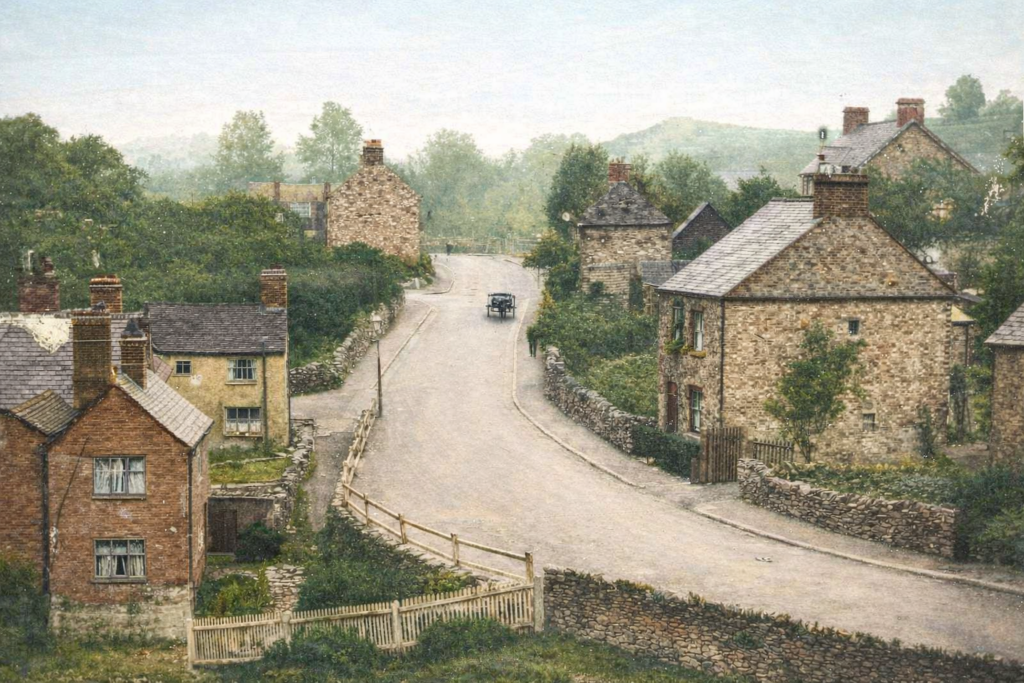
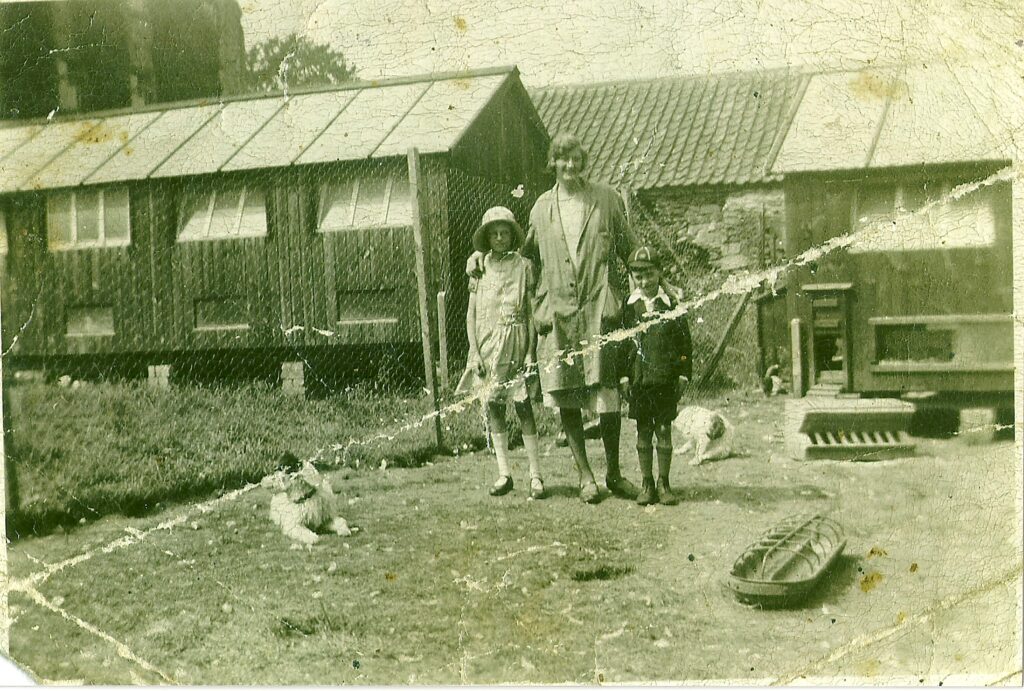
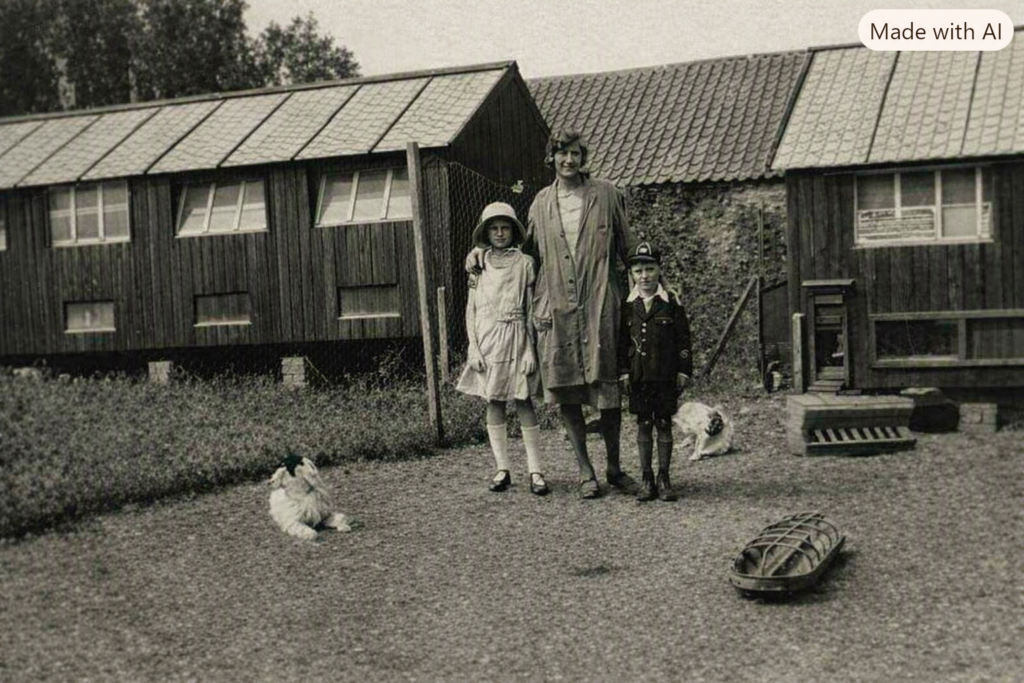
Mount St. Bernard Abbey. Cissie Kirby and Bessie Moore in the 1930’s. Young boy unknown.
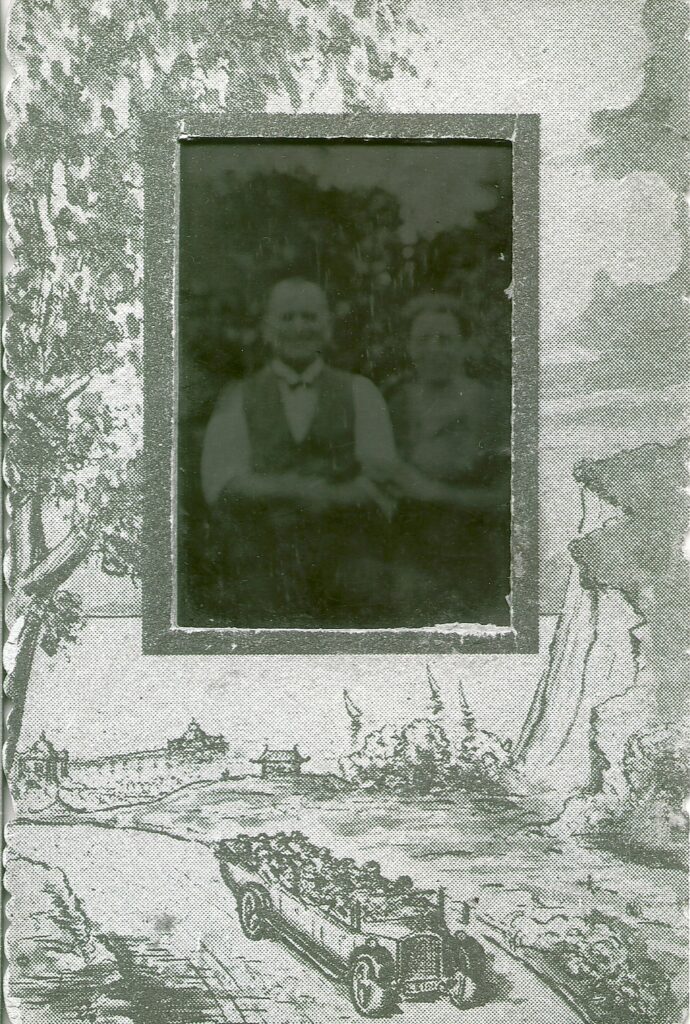
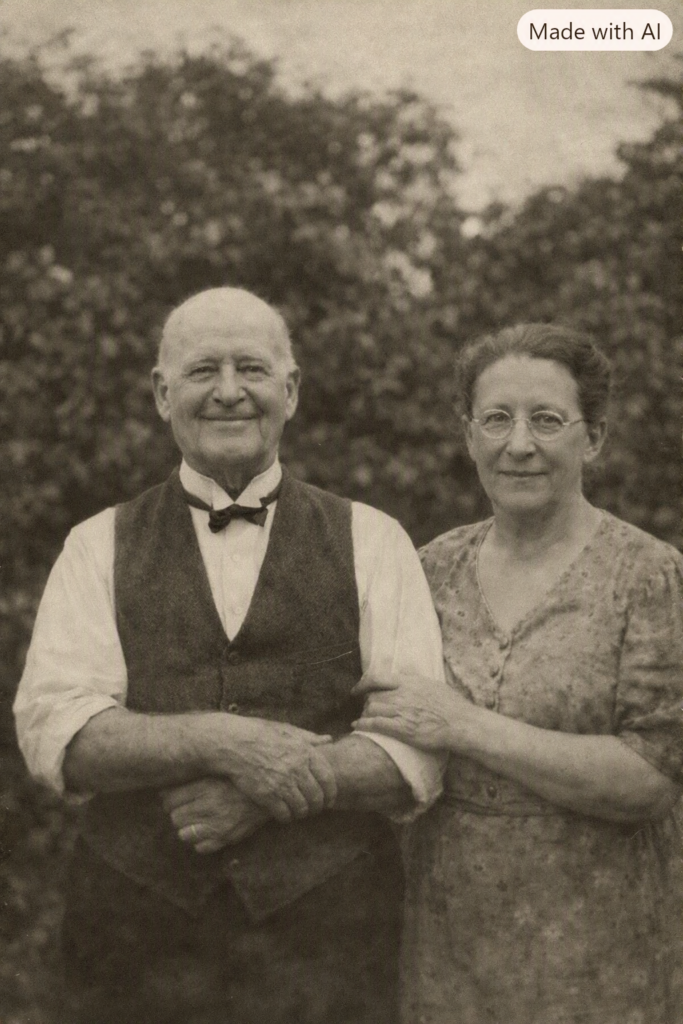
We have several photographs of the Middleton Family. This one is listed as being the parents of Harold Middleton, taken at the White House, Loughborough Road, Whitwick.
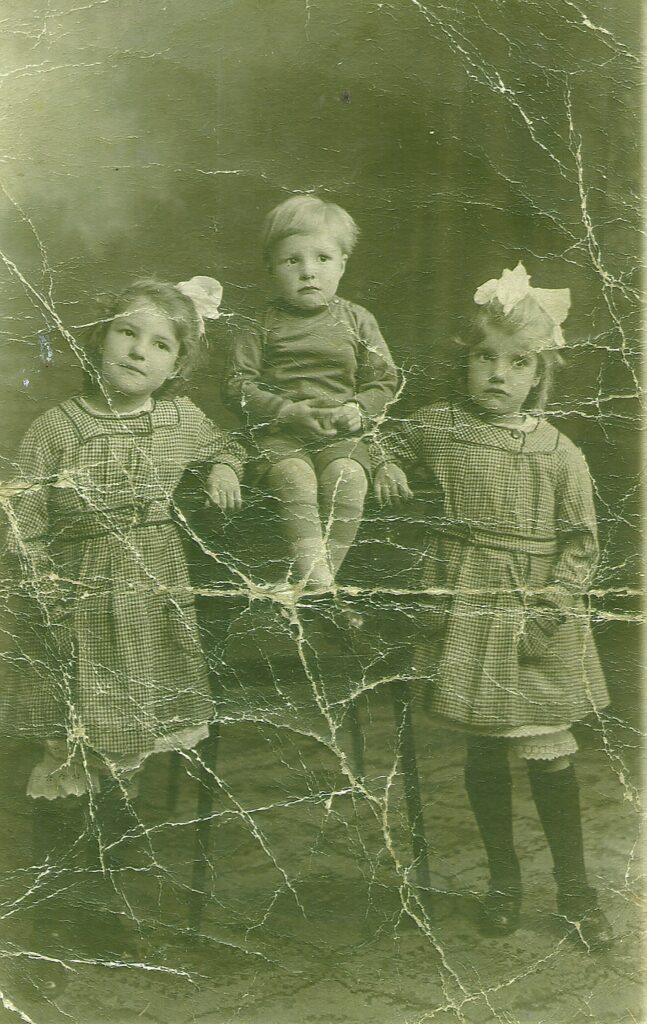
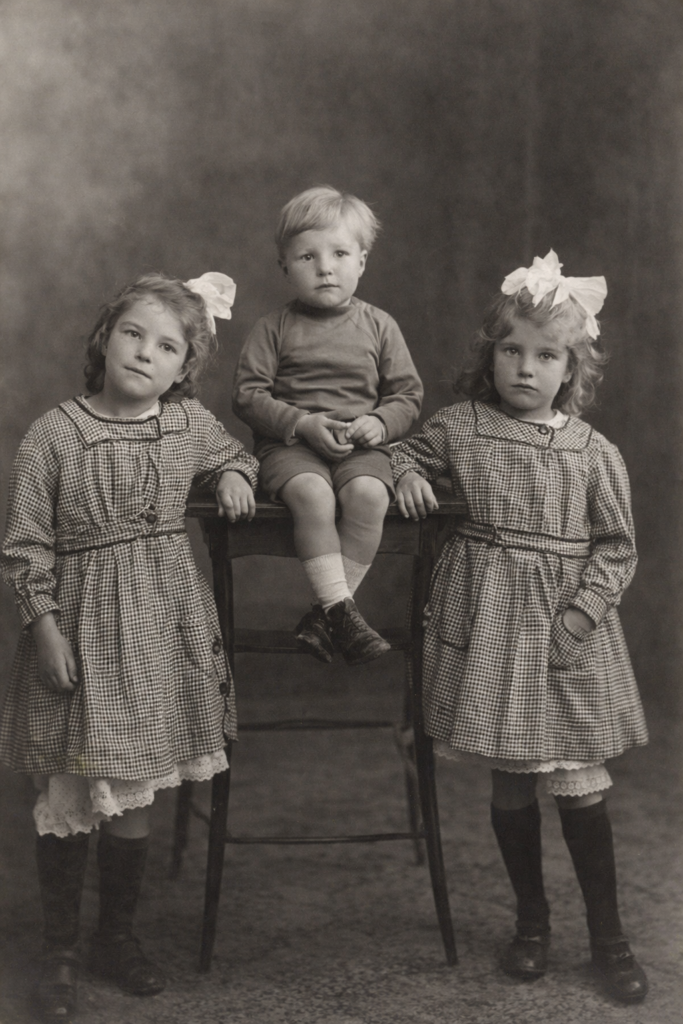
Studio photograph of two small girls and a boy. On the reverse is written Marion and Nancy Cook, Harry Hucknall. There is also the message “Give this photo to Florrie and give my best wishes to her and George as well”. From Ethel.

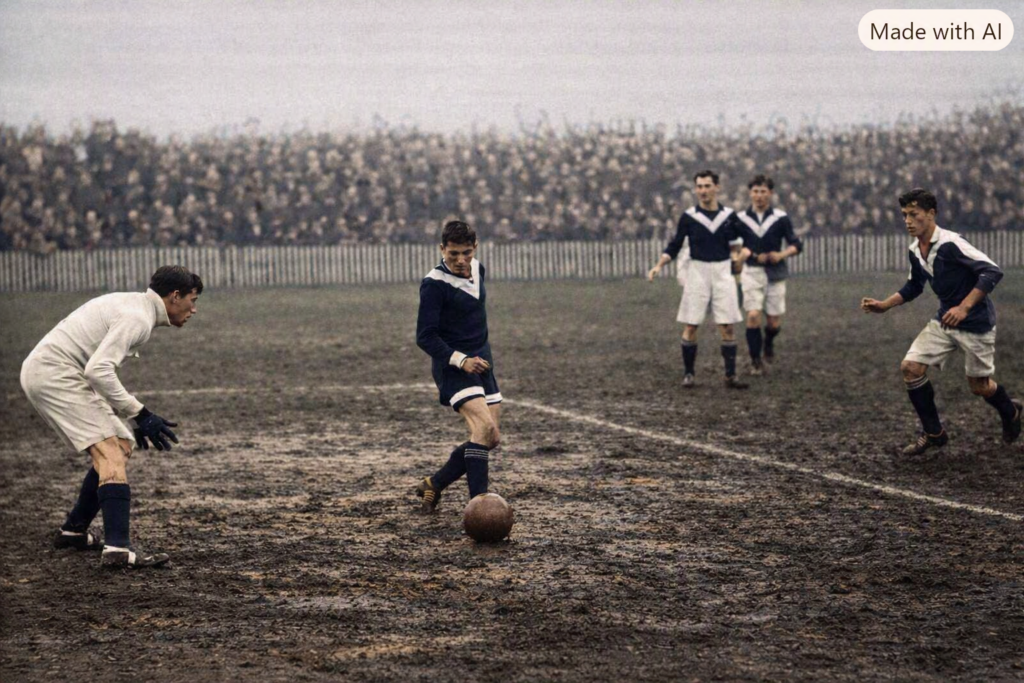
Whitwick Imperial playing Loughborough Corinthians on the Leicester City Ground. Corinthians won 3-1. The picture shows the Whitwick goal-keeper, Roadley, saving a shot. Parker, the Corinthians’ centre-forward was the chief marksman of the day and scored all three goals for Loughborough.